Project
grANT canyon
Remote-controlled formicarium
Project Overview
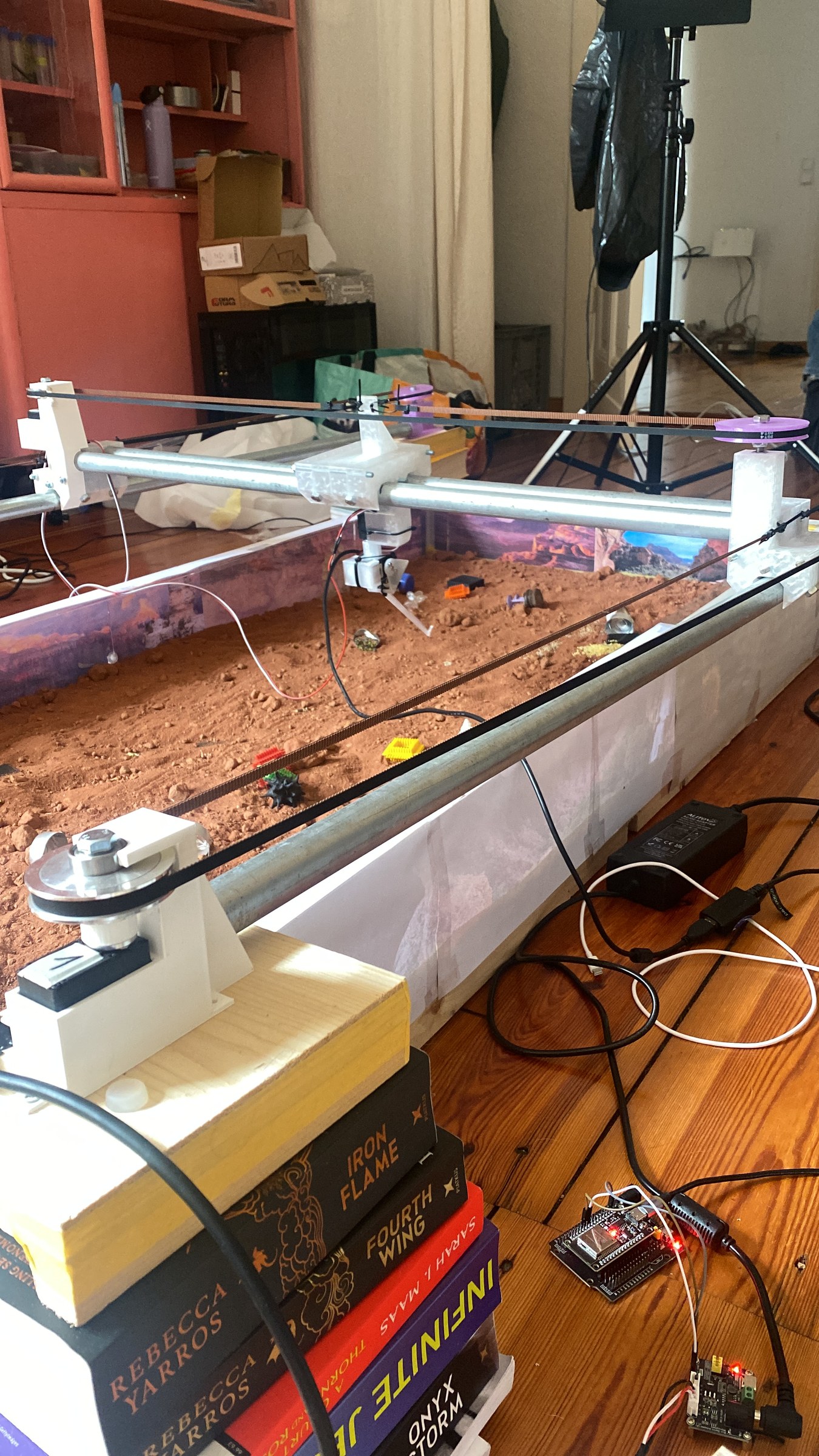
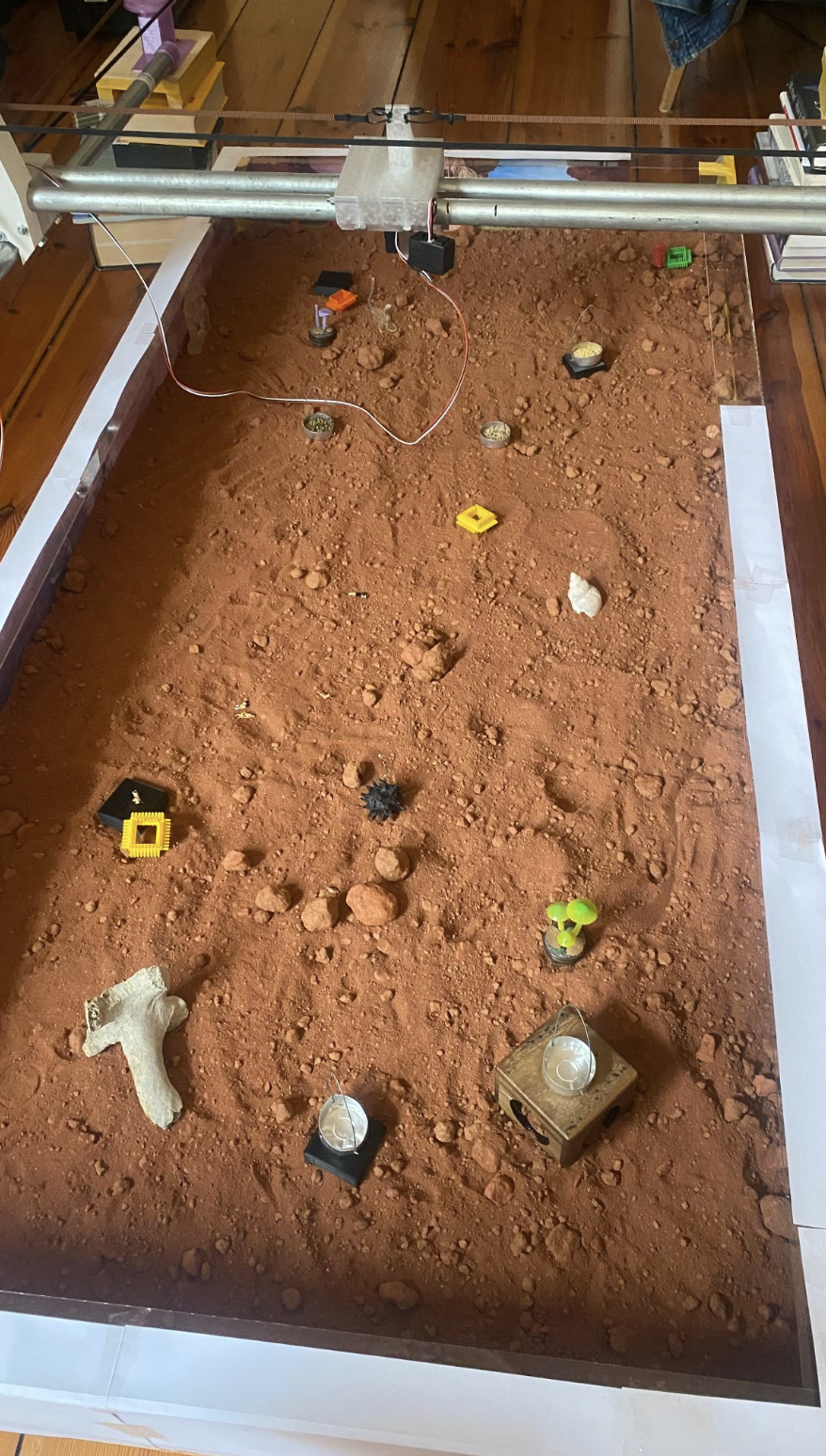
For the project’s exhibition in Linz, a teleoperated formicarium rover was developed to give visitors a spatial insight into the ants’ world. From an animal welfare perspective, the aim was to avoid transporting the colony for the exhibition or subjecting it to prolonged exposure to close human proximity, noise and changing environmental conditions. Instead, visitors were able to observe the formicarium from a distance via a moving camera and control it using a games controller.
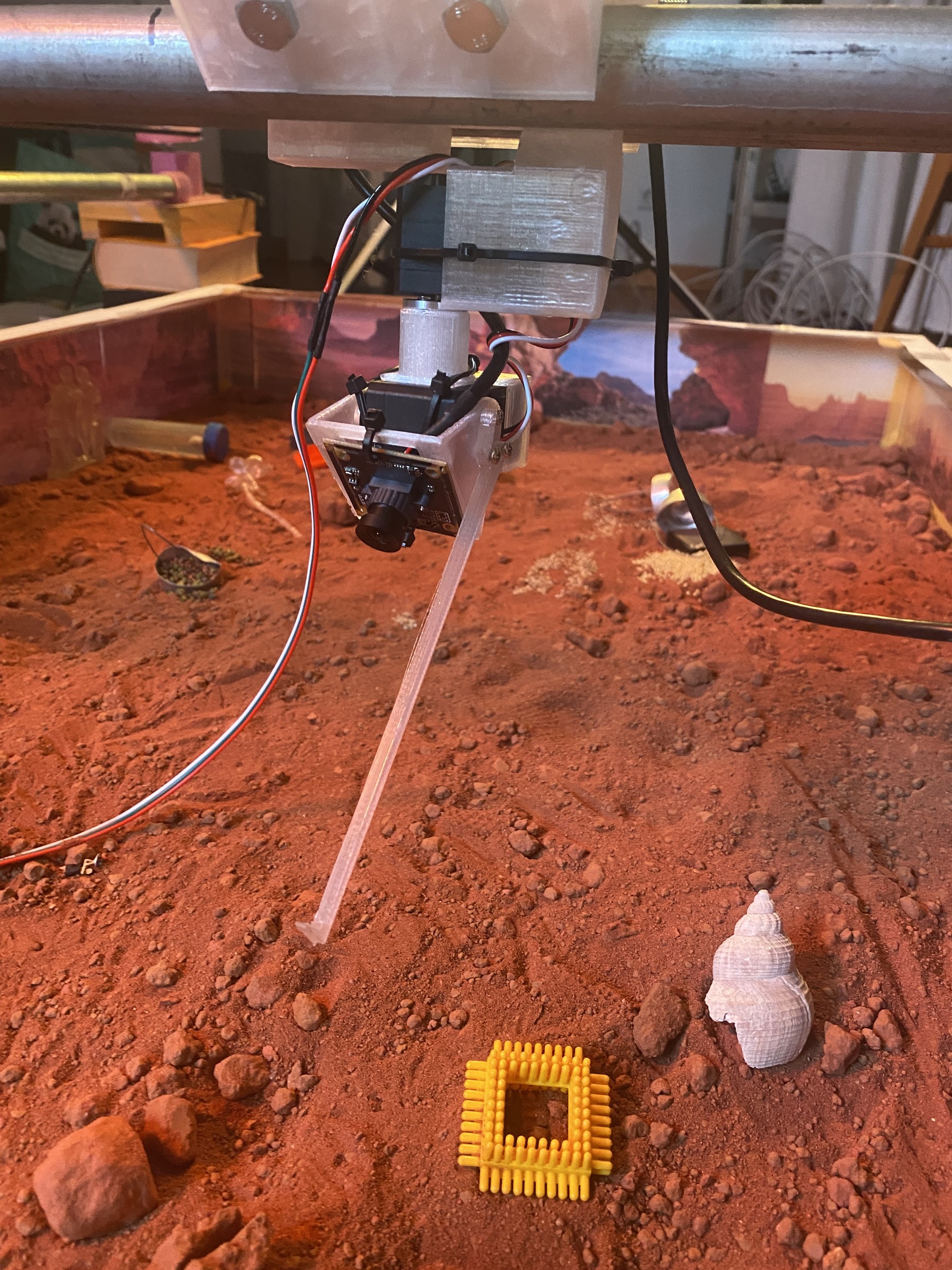
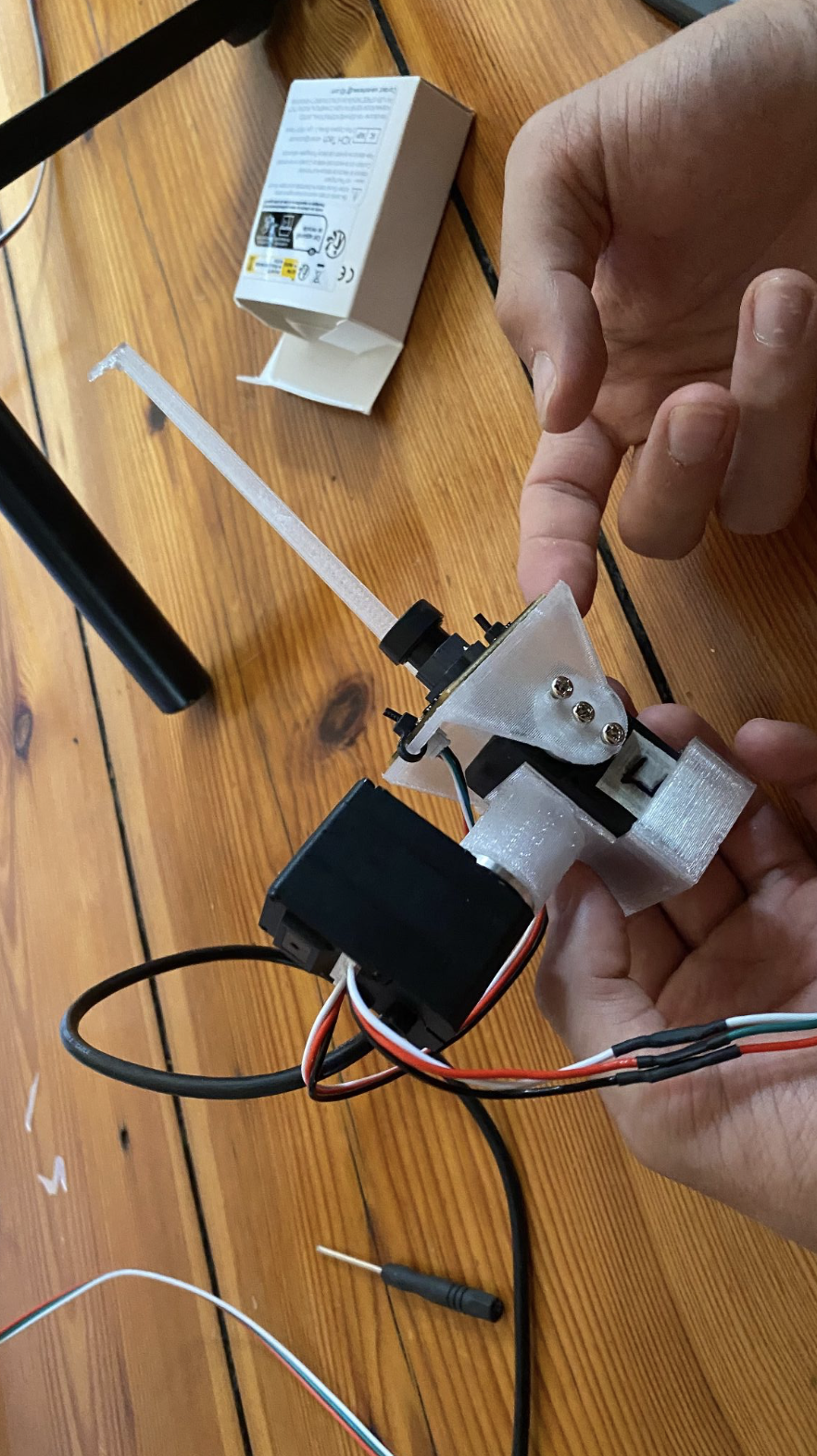
The camera moves along a rail system above the formicarium and is fitted with a small hook. This allows containers holding seeds for the ants to be transported and tipped over. However, the primary aim is not to feed the ants, but to explore the environment from a perspective approximating that of the ants and at a speed of movement similar to theirs. The range of movement and speed are technically limited so that the camera and hook do not touch the formicarium and do not cause any stress-inducing noises or vibrations.
A key challenge is the teleoperation latency of around one to two seconds. Users must therefore plan their movements in advance and continuously adjust them based on the camera feed. Initial observations during the exhibition show that visitors quickly get used to this delayed control and, in some cases, immerse themselves for ten to twenty minutes in the visual and physical exploration of the formicarium. The rover thus constitutes a remote interface that is sensitive to animal welfare, in which perception, delay, control and responsible intervention can be experienced directly.
1 / 4
Relationships
- Exhibited at Ars Electronica Festival 2025
- Related to Artificial ants and ethical entanglements
- Related to Seed.Potato.Pixel