Project
Lindau Recycling Centre
Architecture and AI – A robotic recycling concept
Project Overview
What happens to our waste once we’ve disposed of it?
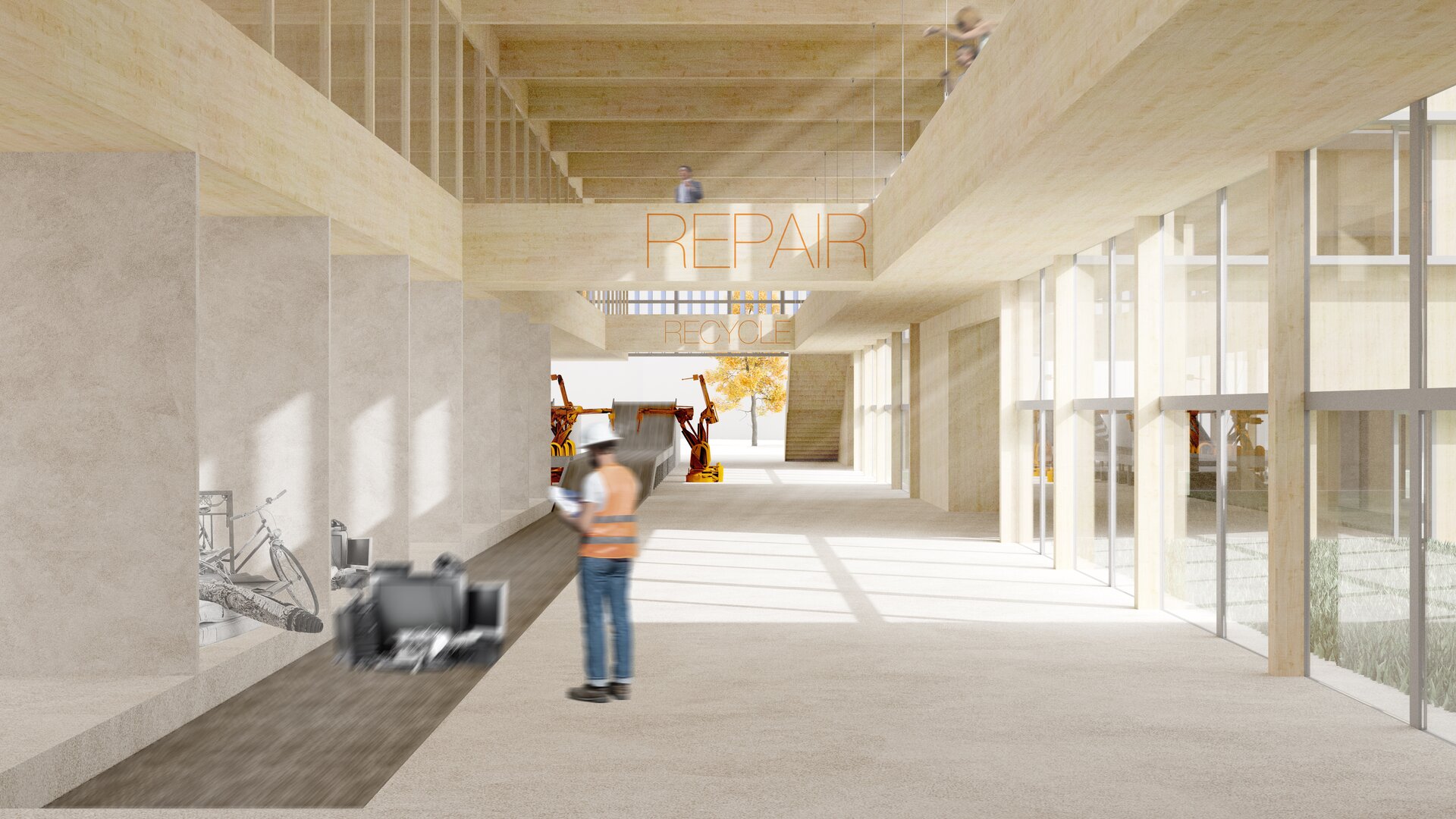
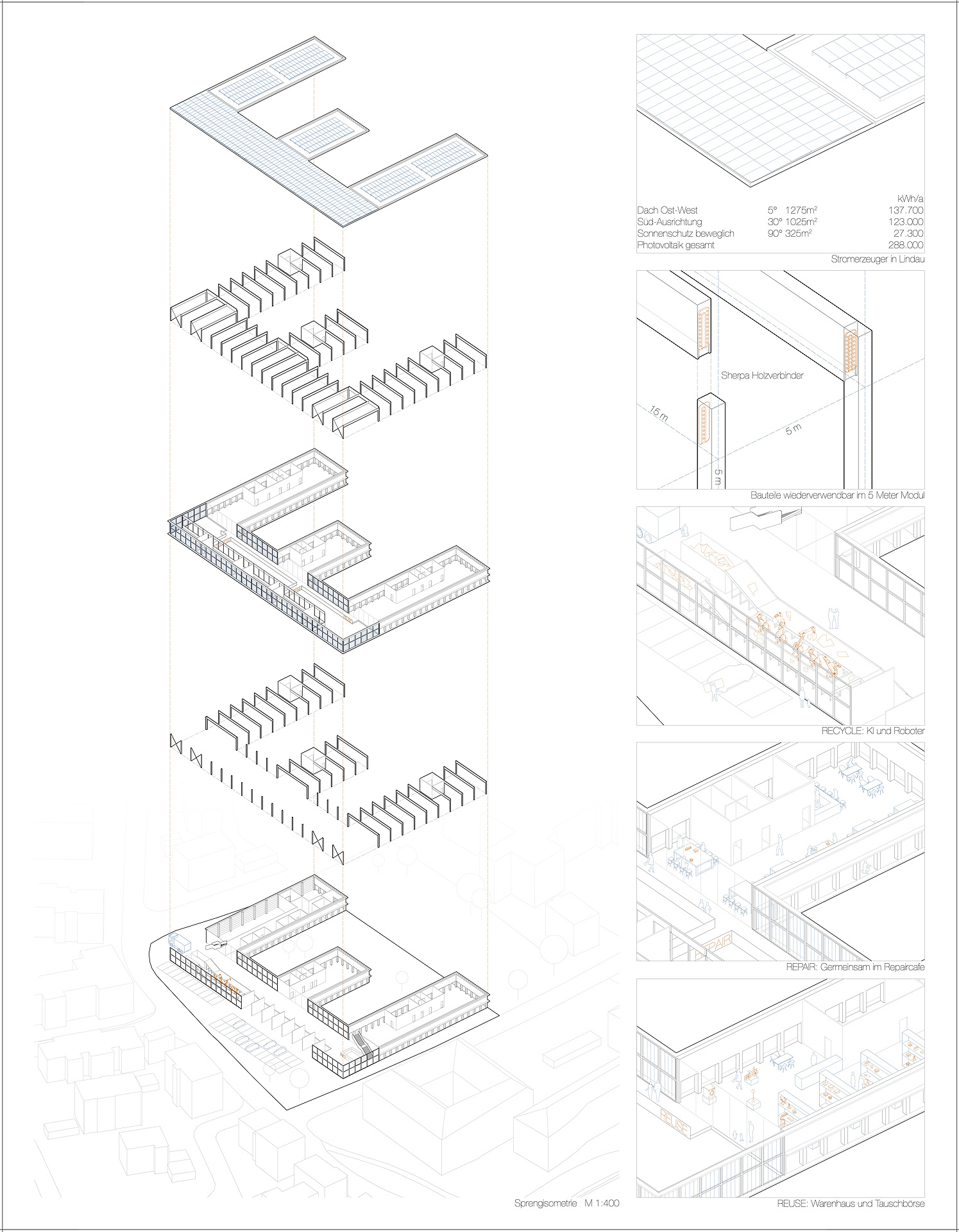
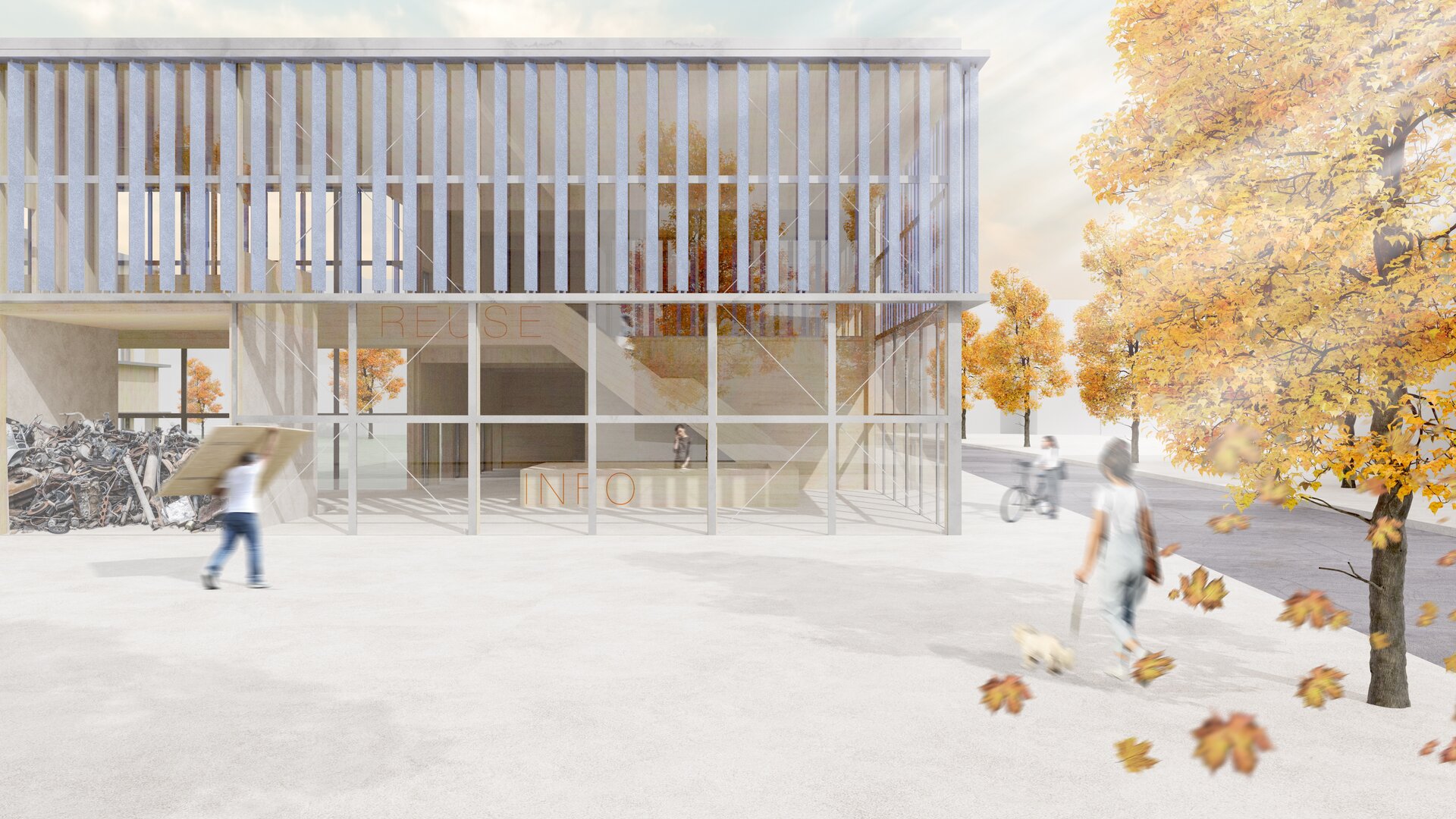
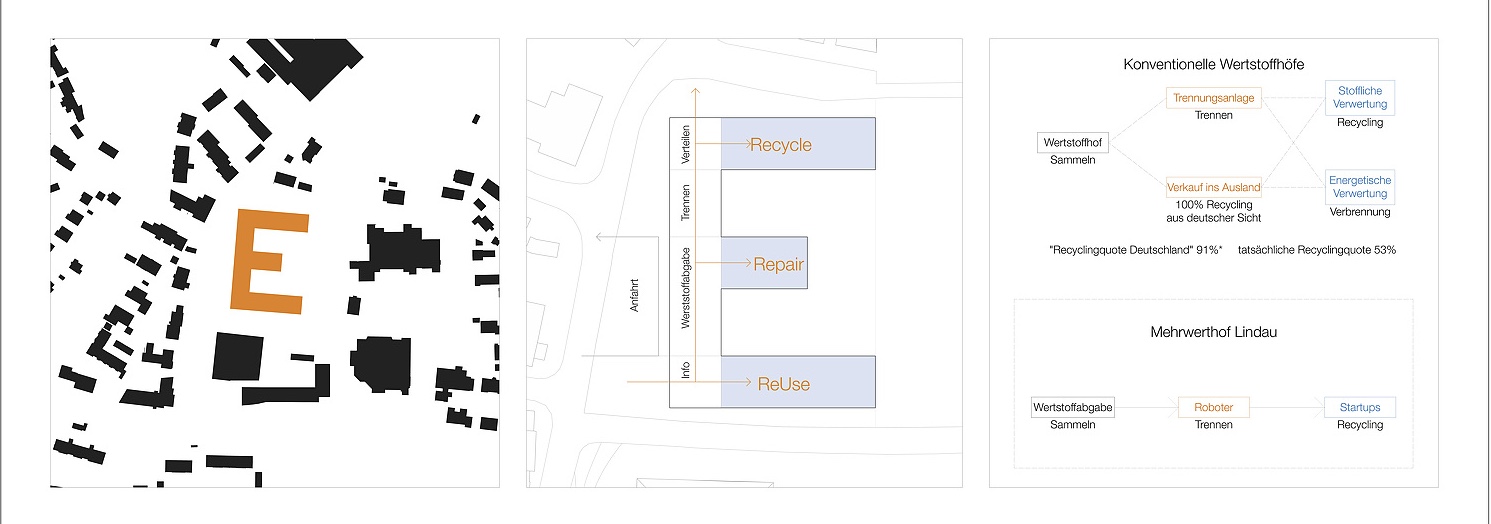
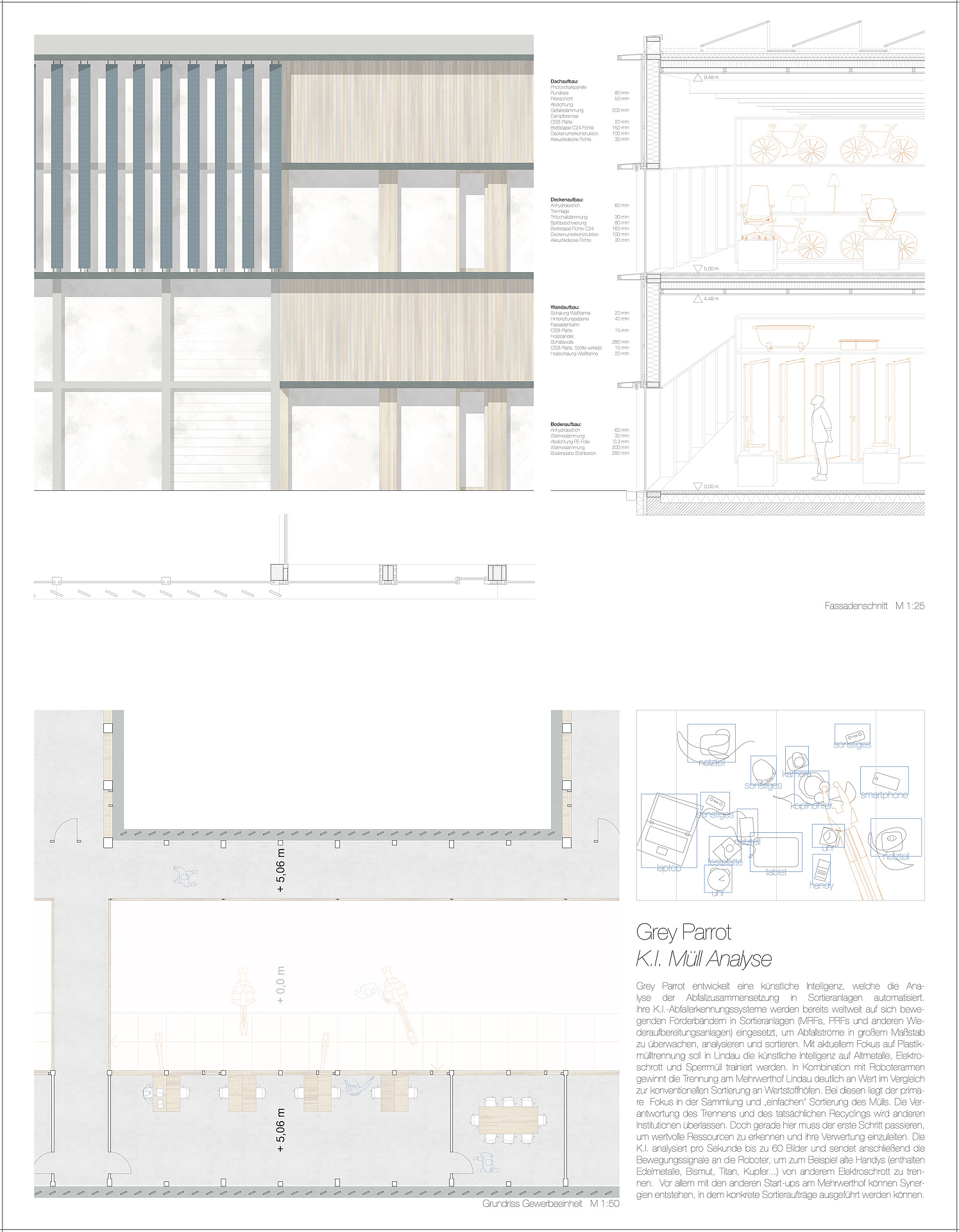
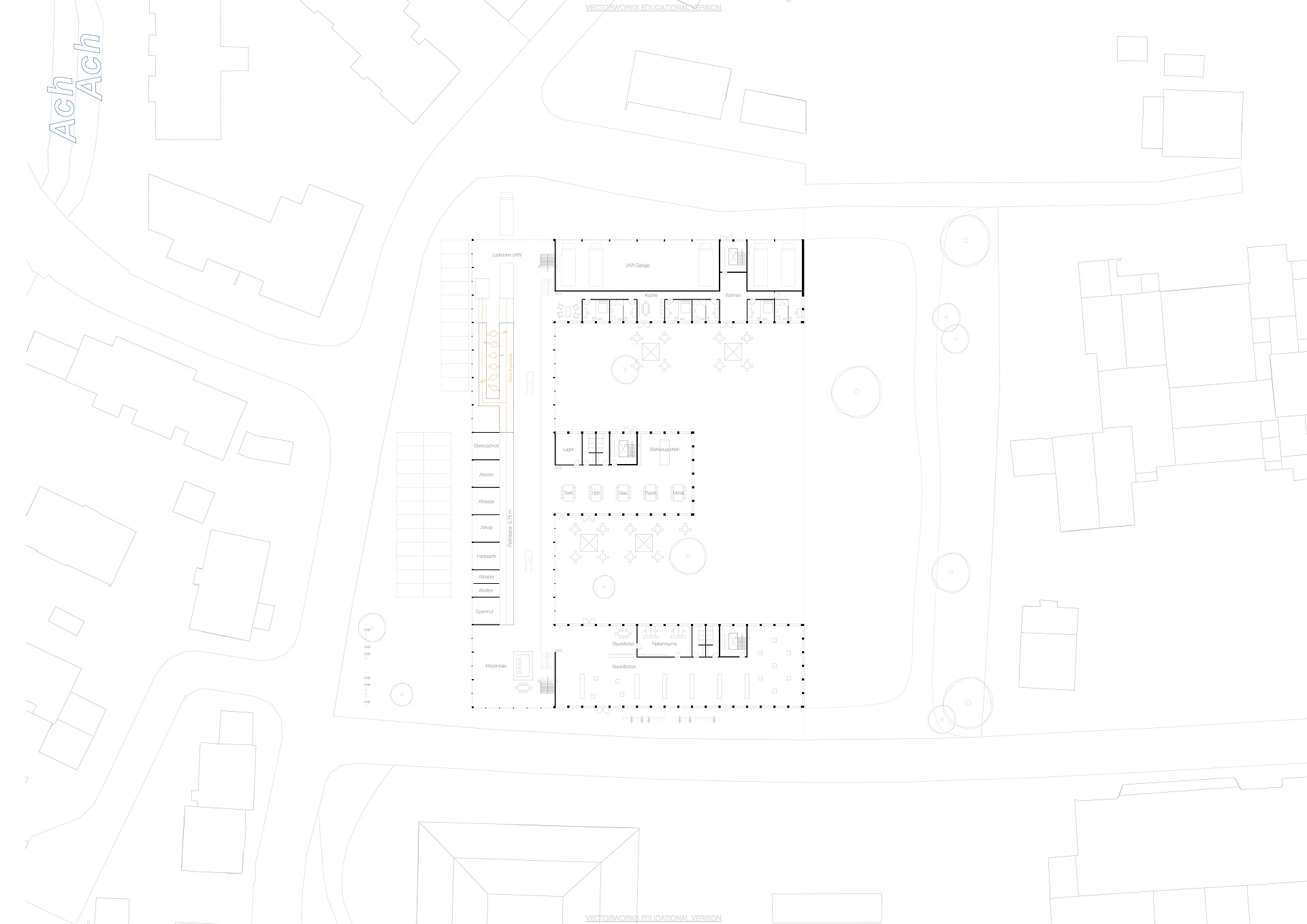
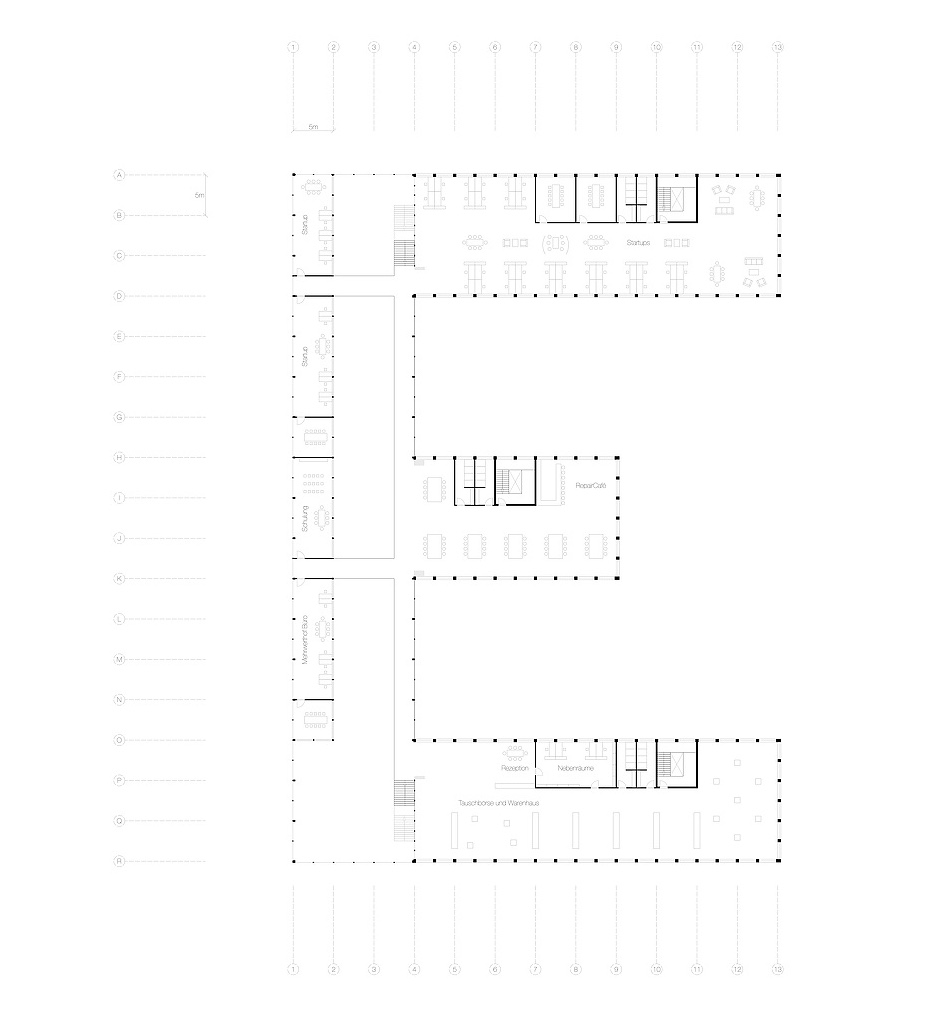
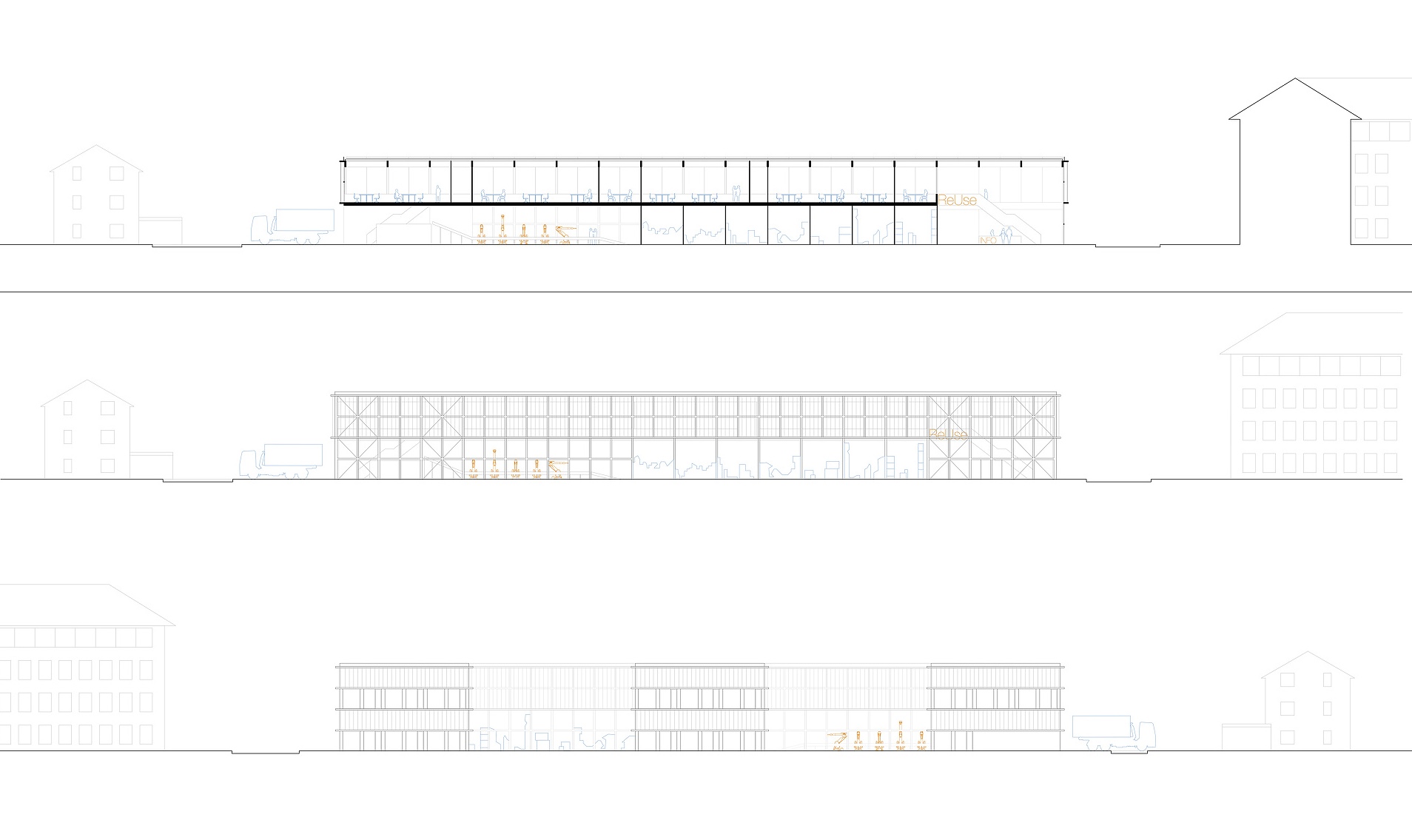
An issue that is often overlooked, even though it is of the utmost importance for our environment. Germany may pride itself on being the world champion of recycling, but the truth is more complex than that: selling our waste abroad — without regard for what actually happens to it — counts as ‘recycling’. This structural problem makes waste management logistics a crucial issue, in which the recycling centre plays a significant role. The Lindau Recycling Centre goes beyond conventional recycling centres, as it centres on the motto “REUSE, REPAIR and RECYCLE”, a philosophy that is also reflected in its architecture. Three “fingers” attached to the main wing house start-ups specialising in these areas. These ‘fingers’ form a key hub where recyclable materials can be returned to the circular economy. The glass-fronted main block acts as a filter for both people and resources. Visitors can deposit their recyclables in various bins, from where they are sorted and processed by robots on the conveyor belt. The AI-based waste sorting system sets this recycling centre apart from ordinary waste disposal facilities and enables controlled reuse in a single location. In the south-west corner is an information area that advises visitors on the best places to drop off their recyclables. At the same time, they can gain knowledge here, buy second-hand goods or find reusable components. By providing the opportunity to exchange knowledge and resources, the Lindau Recycling Centre helps to sustain the life cycle of our resources. The main block and the wings are structurally organised on a 5x5x15-metre grid. The main block features a glazed post-and-beam façade, whilst the wings are modern timber structures. The structural grid and connections are designed to be suitable for reuse. In this way, the architecture of the Lindau Recycling Centre not only emphasises the transparency of recycling but also promotes sustainability in building design.
Robotic and AI-assisted sorting
Grey Parrot is developing artificial intelligence that automates the analysis of waste composition in sorting facilities. Its AI waste recognition systems are already being used worldwide on moving conveyor belts in sorting facilities (MRFs, PRFs and other recycling plants) to monitor, analyse and sort waste streams on a large scale. With the current focus on plastic waste separation, the aim in Lindau is to train the artificial intelligence to recognise scrap metal, electronic waste and bulky waste.
When combined with robotic arms, the sorting process at the Lindau Recycling Centre is significantly more effective than conventional sorting at recycling centres. At these centres, the primary focus is on the collection and ‘simple’ sorting of waste. The responsibility for sorting and the actual recycling is left to other organisations. Yet it is precisely here that the first step must be taken to identify valuable resources and initiate their recovery.
The AI analyses up to 60 images per second and then sends movement signals to the robots to, for example, separate old mobile phones (which contain precious metals, bismuth, titanium, copper, etc.) from other electronic waste. Synergies can be created, particularly with the other start-ups at the Lindau Recycling Centre, by carrying out specific sorting tasks.
Drawn plans
1 / 7
Supervised by
Prof. Dipl.-Ing. Lydia Haack and Prof. Dr.-Ing. Thomas Stark