Exhibition
Lange Nacht der Wissenschaften
Algorithmic Muse
Lange Nacht der Wissenschaften Berlin 2024
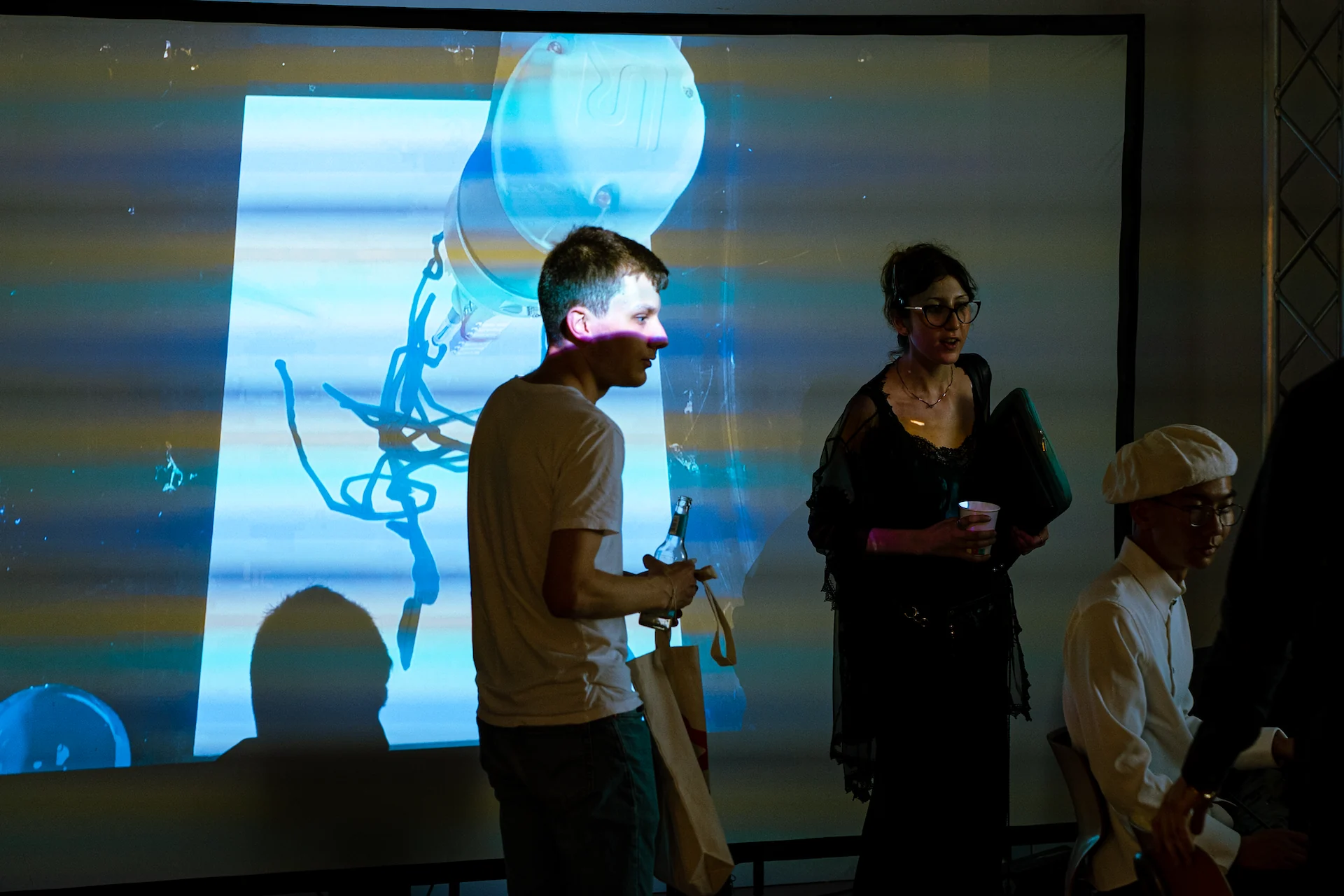
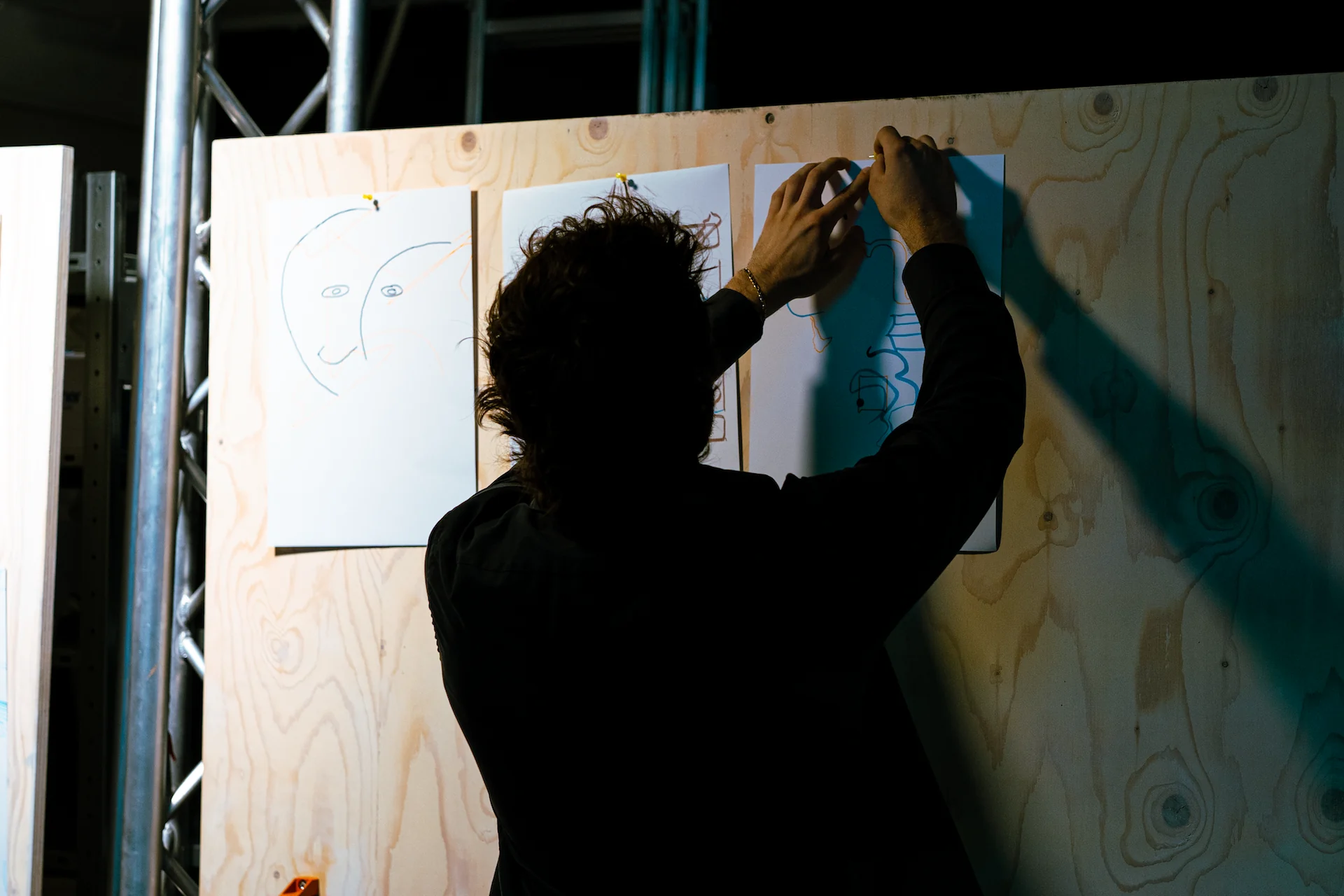
On 22 June 2024, selected research projects from New Practice in Art and Technology and the joint TU Berlin–UdK Berlin Master’s programme Design & Computation were presented during the Lange Nacht der Wissenschaften. The exhibition and workshops took place at the New Practice Studio in the Alter Lesesaal at TU Berlin, inviting visitors to encounter research through hands-on experiments at the intersection of art, technology and science.
Algorithmic Muse: three drawing encounters
Algorithmic Muse was part of the exhibition with a participatory workshop exploring how interfaces and physical embodiment shape a shared drawing process. Across three stations, visitors moved between a digital drawing environment, a dialogue with another person on paper, and an encounter with an AI-controlled pen plotter.
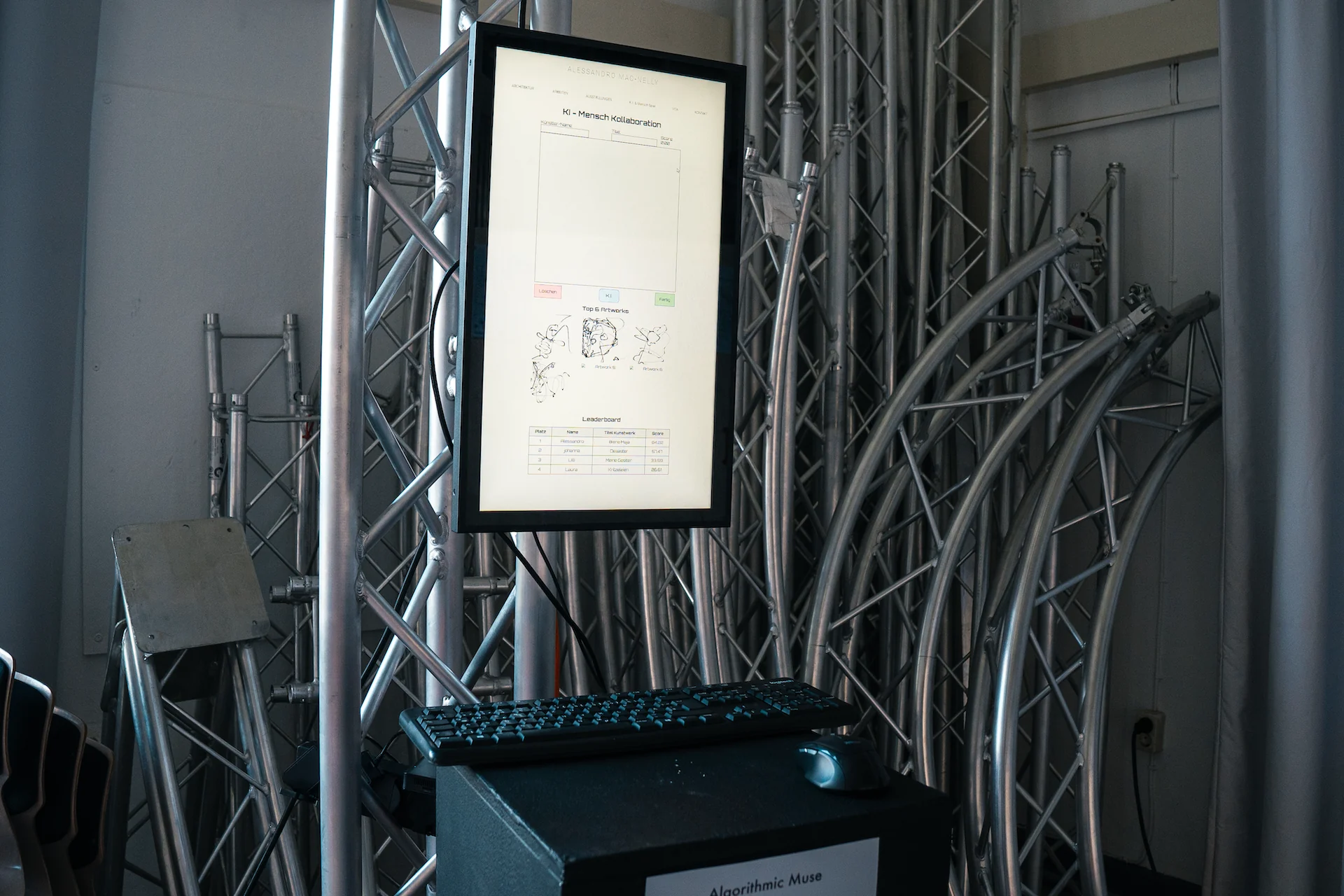
Station 1 — Drawing with a score
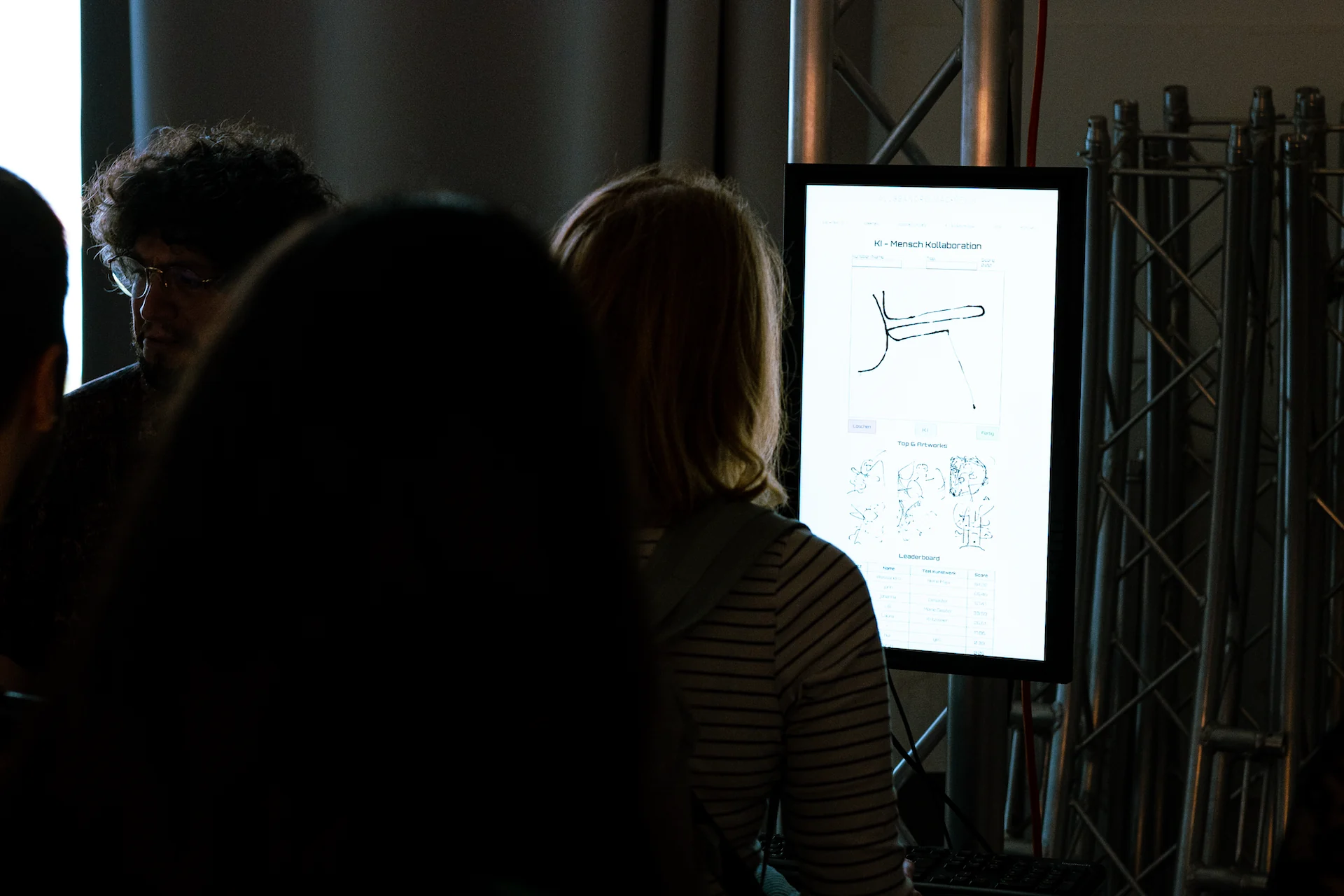
The first prototype turned the AI’s digital drawing environment into a touchscreen game. Visitors drew directly on the screen and received feedback and a score, with a leaderboard encouraging them to experiment with different marks and compositions.
The score made the model’s evaluation process visible: an image classifier assessed how closely each drawing resembled the human-figure drawings the system had been trained to recognise. This classifier also supplied the feedback used to train the reinforcement learning agent in a GAN-inspired arrangement of drawing and evaluation. Visitors could therefore try drawing under the same evaluative conditions as the AI, discovering which marks the model rewarded. The score expressed the classifier’s learned preferences rather than a universal measure of artistic quality.
Station 2 — A dialogue on paper
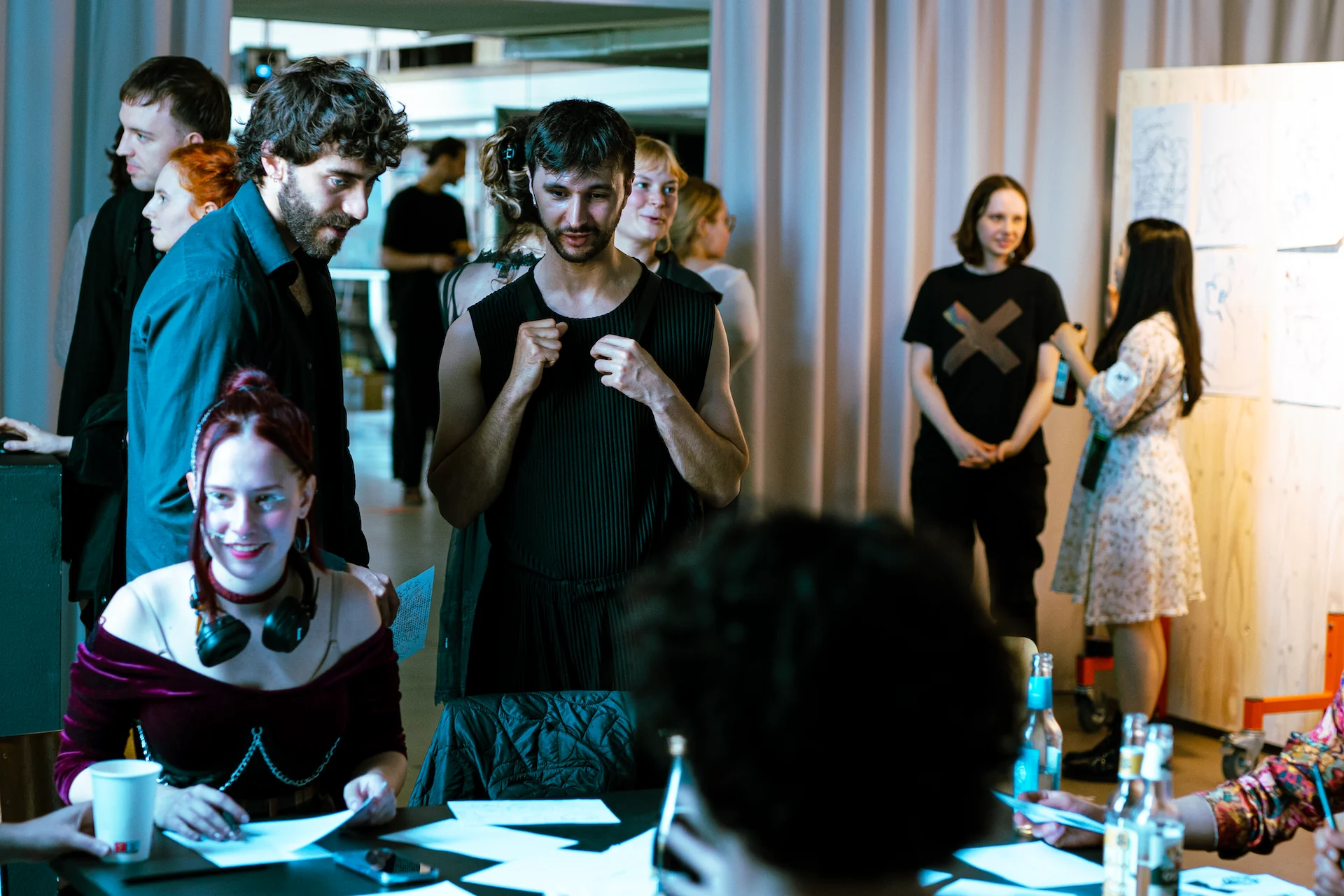
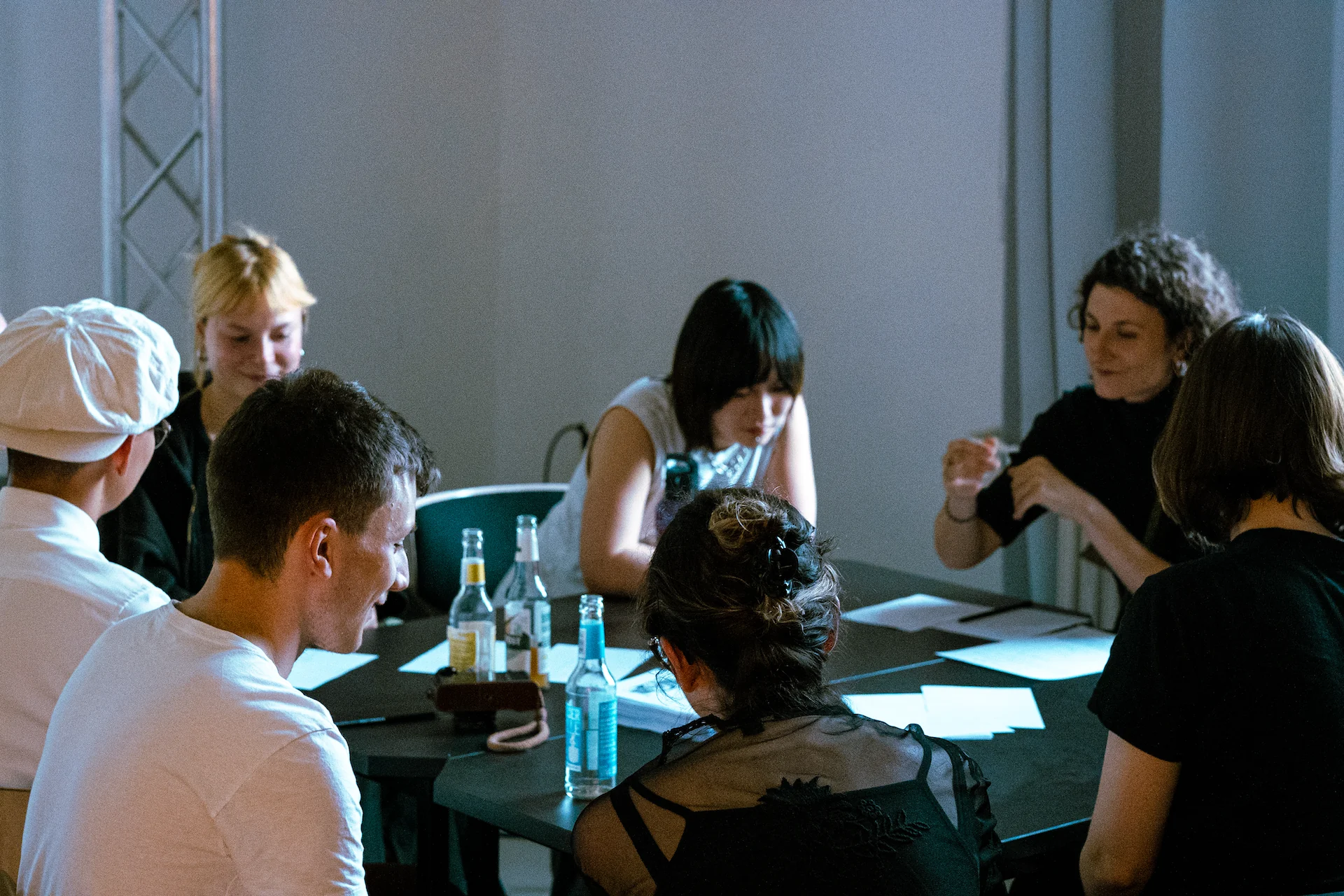
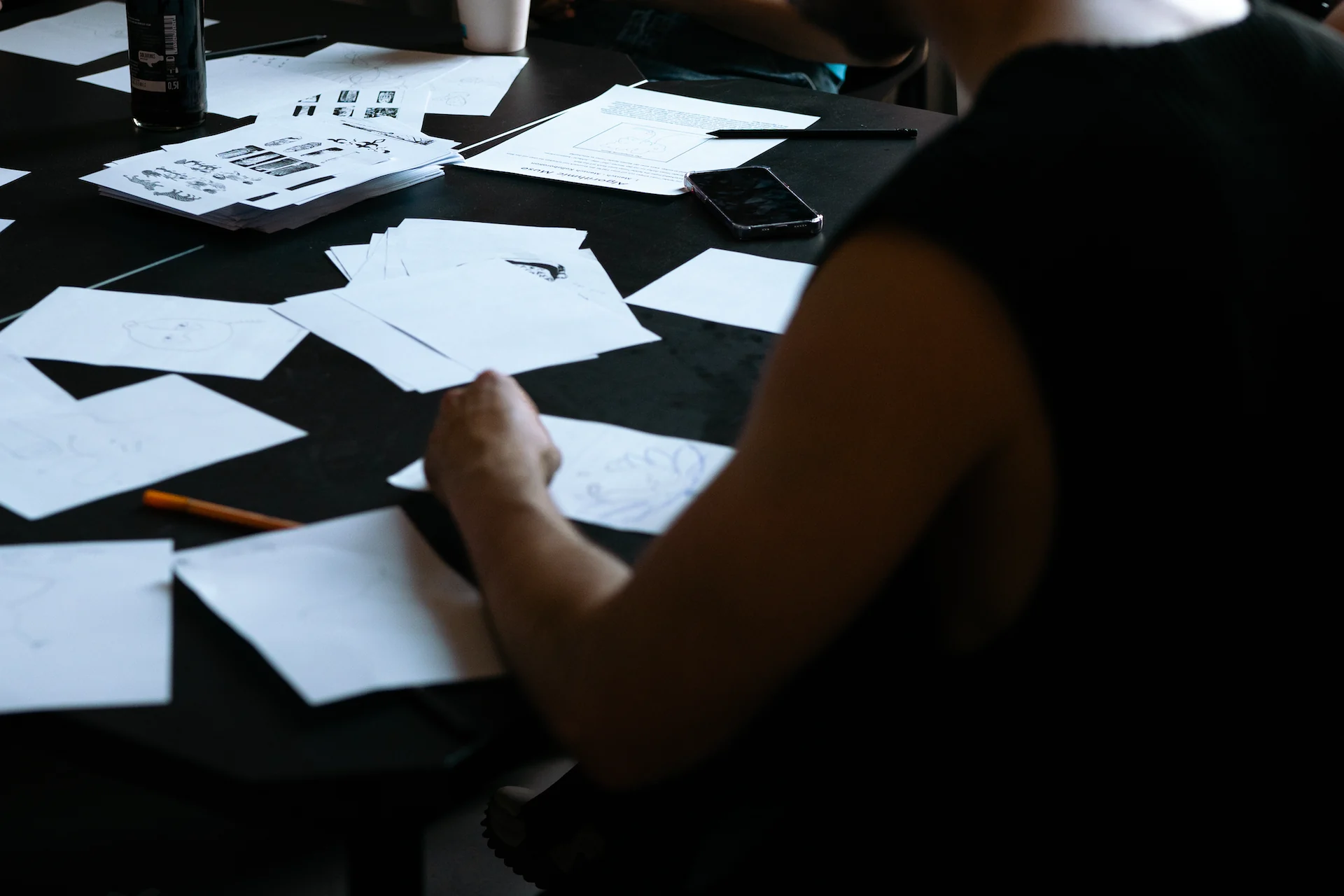
At the second station, two people shared a sheet of paper. The rules were simple: they could not agree beforehand on what to draw, could not speak during the process, and took turns adding just one line at a time. Every response had to emerge from the marks already on the page.
Moving from the digital environment to another human drawing partner offered a direct comparison. Without verbal explanations, participants had to interpret each other’s gestures, anticipate intentions and negotiate a drawing entirely through lines on paper.
Station 3 — Drawing with a repurposed pen plotter
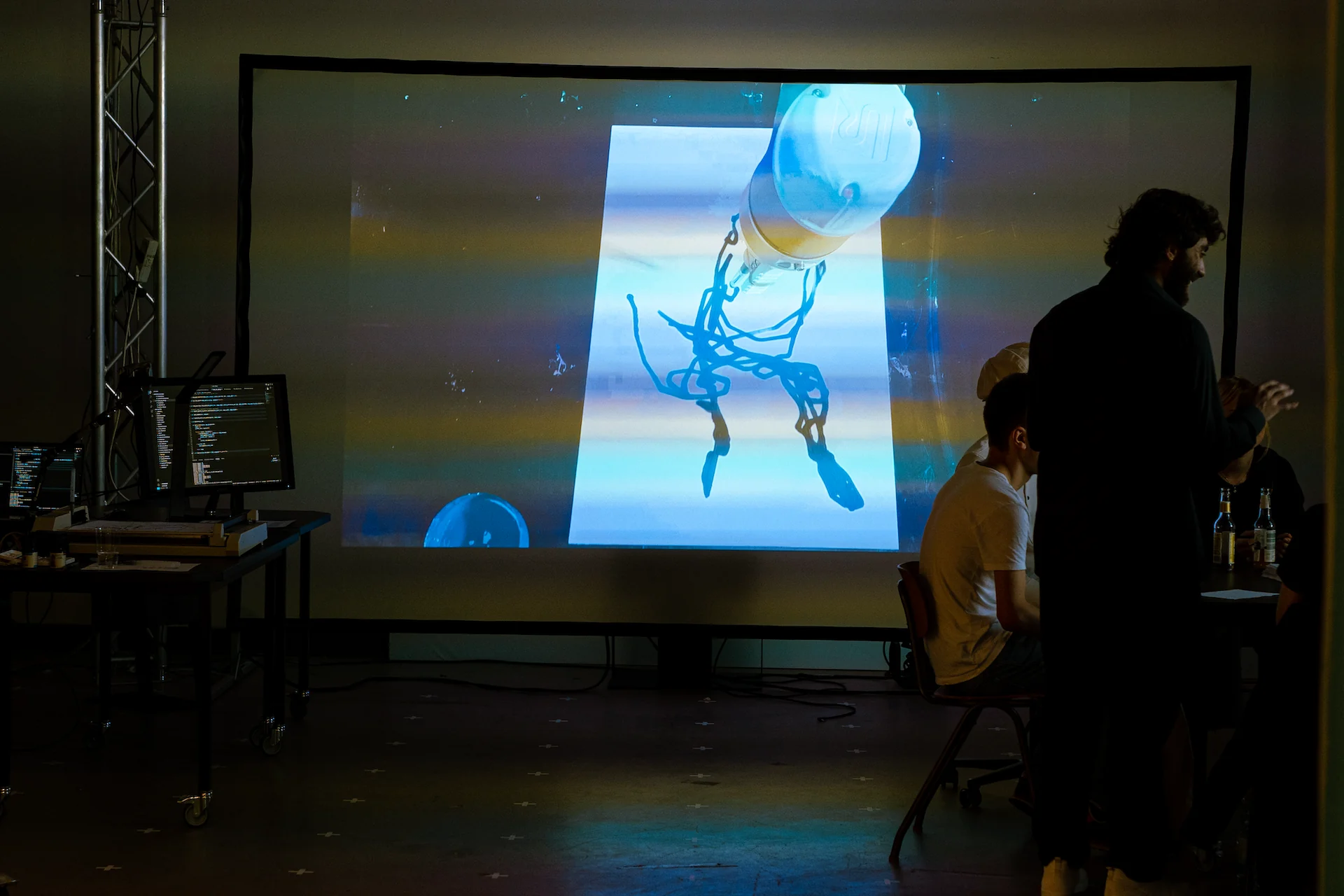
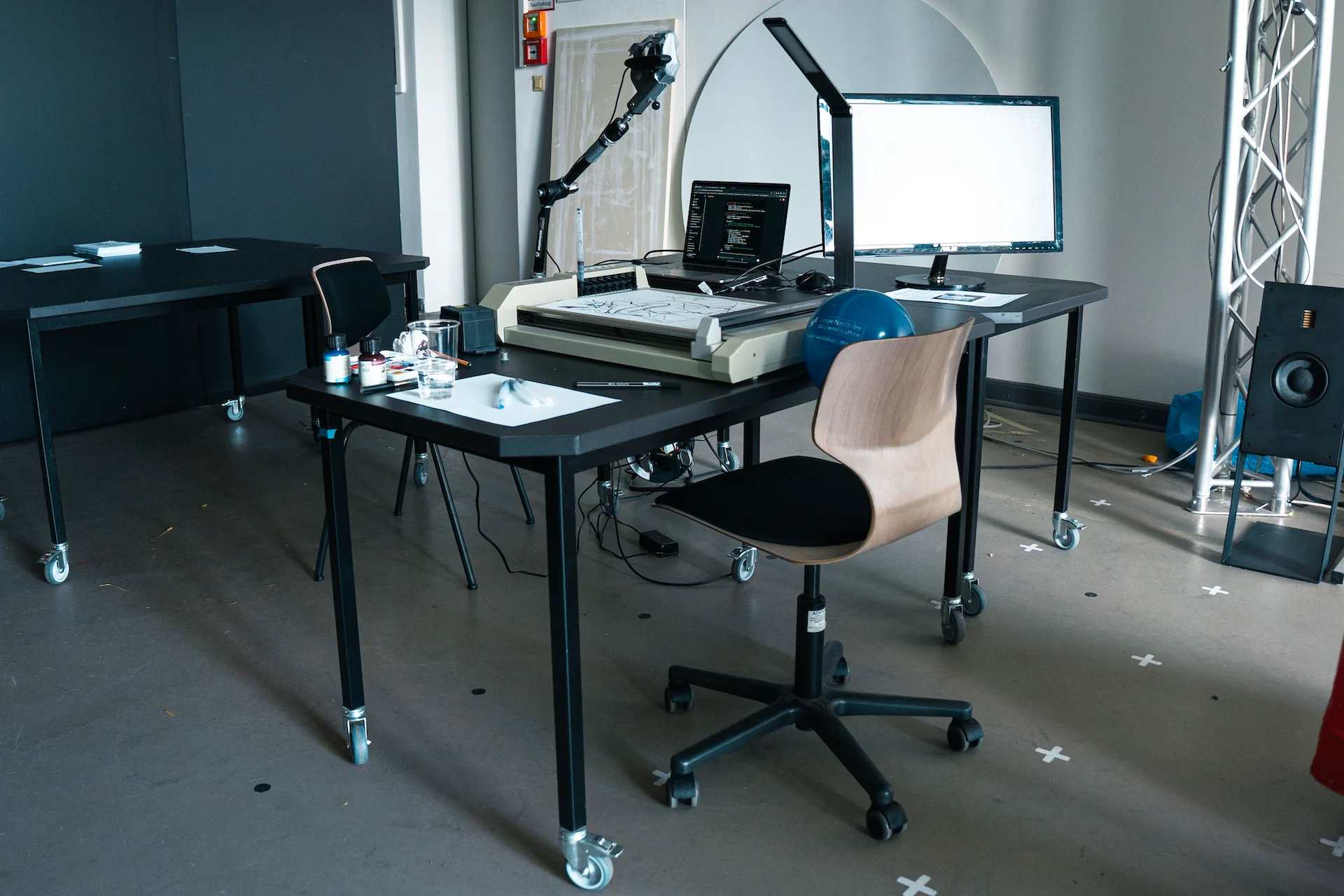
The third station brought the AI into a physical drawing process through a modified Roland DXY-series flatbed pen plotter, originally designed to produce technical drawings and plans. Connected to the drawing model and a camera, the plotter became a partner that could respond to the evolving image.
Visitors and the machine alternated, adding one line per turn. Pressing a button triggered the next machine turn: the camera recorded the current state of the drawing, allowing the model to respond to what was actually on the paper. The workshop connected the digital model’s decisions to visible mechanical movements and physical marks, letting participants experience how a shared drawing changes when its partner takes material form.
Event documentation: TU Berlin’s official programme announcement.
Source TU Berlin.
Exhibition photographs
1 / 9
Relationships
- Exhibited project Algorithmic Muse