Project
Seed.Potato.Pixel
Human-AI-Ants-Interface
Extended Abstract
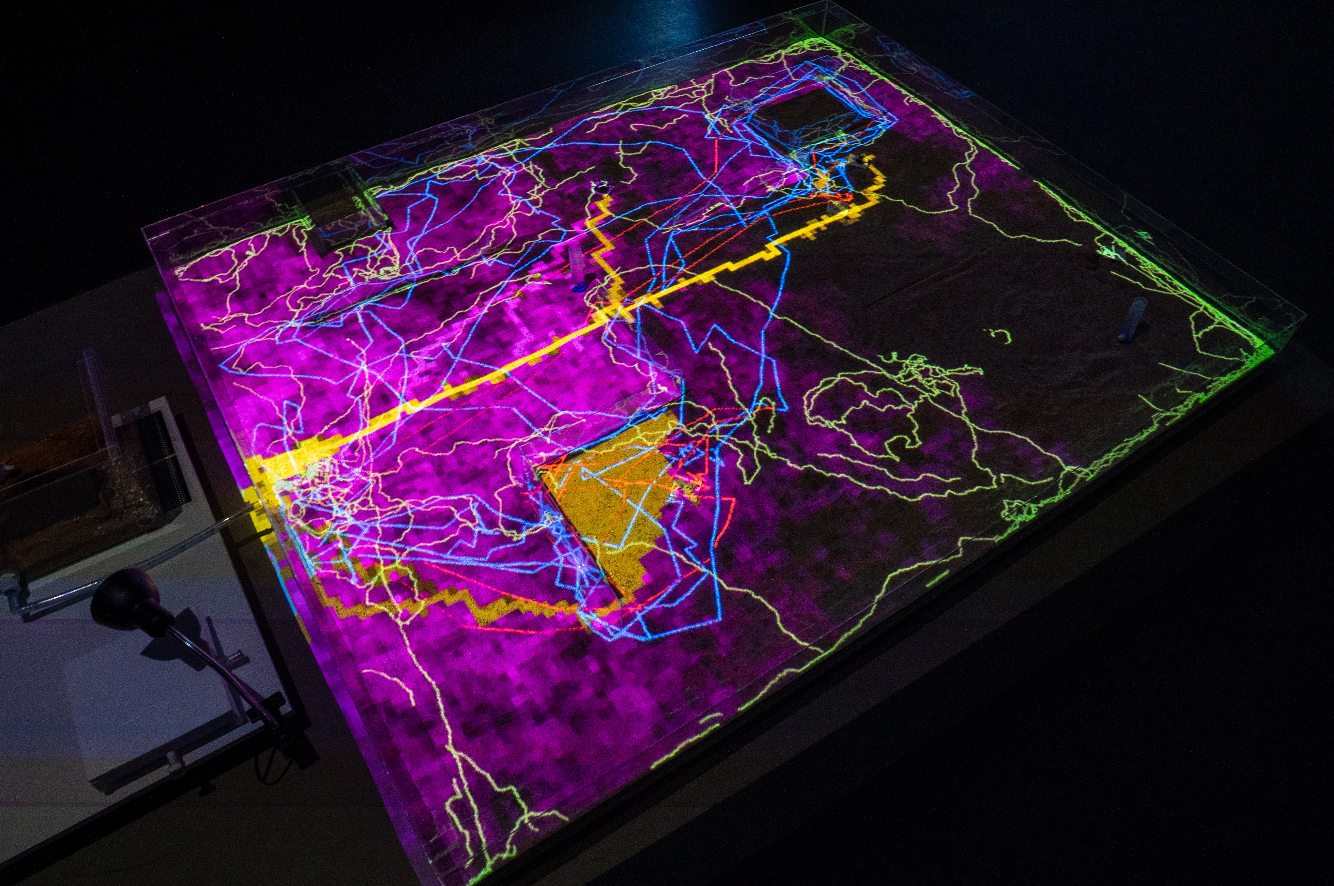
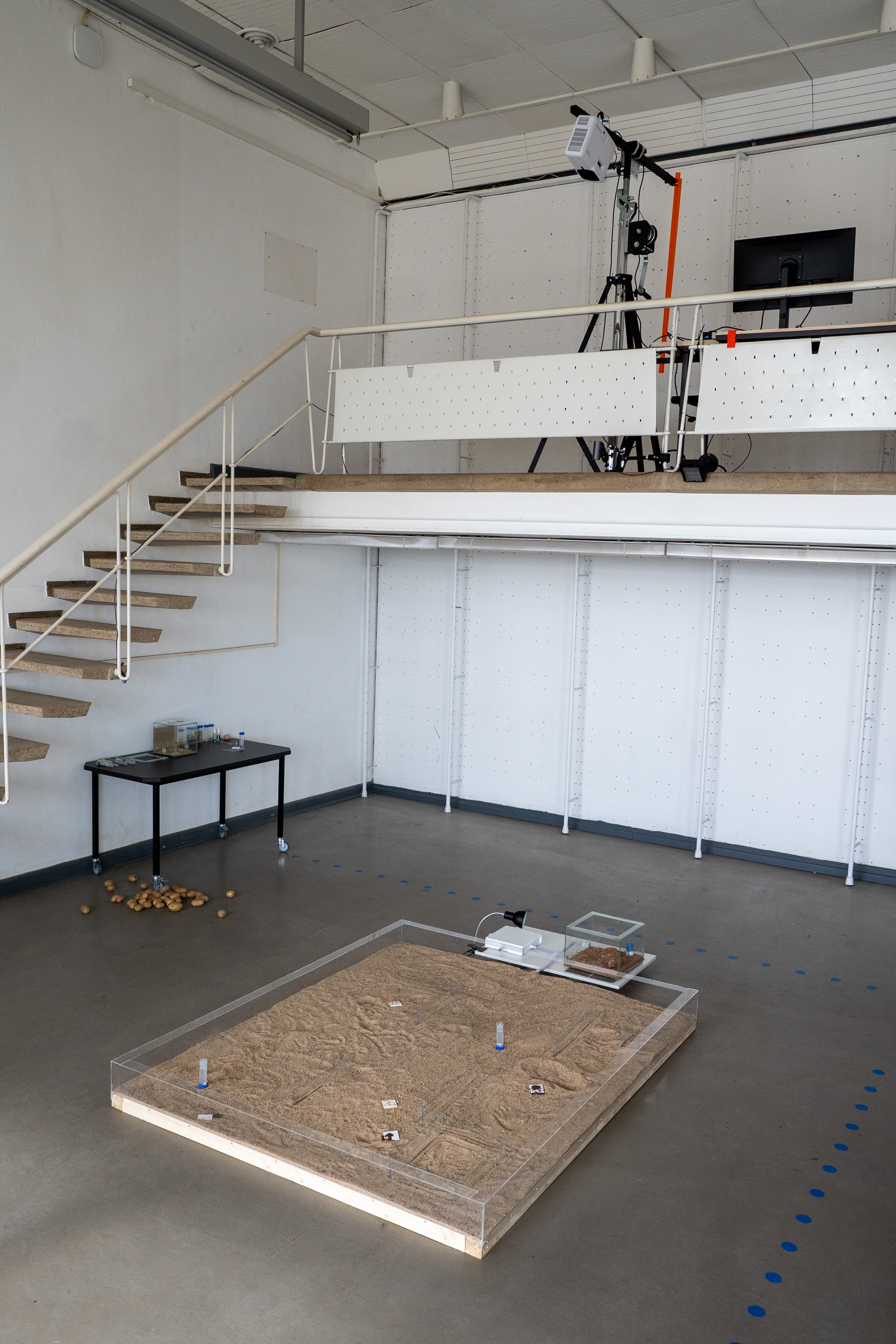
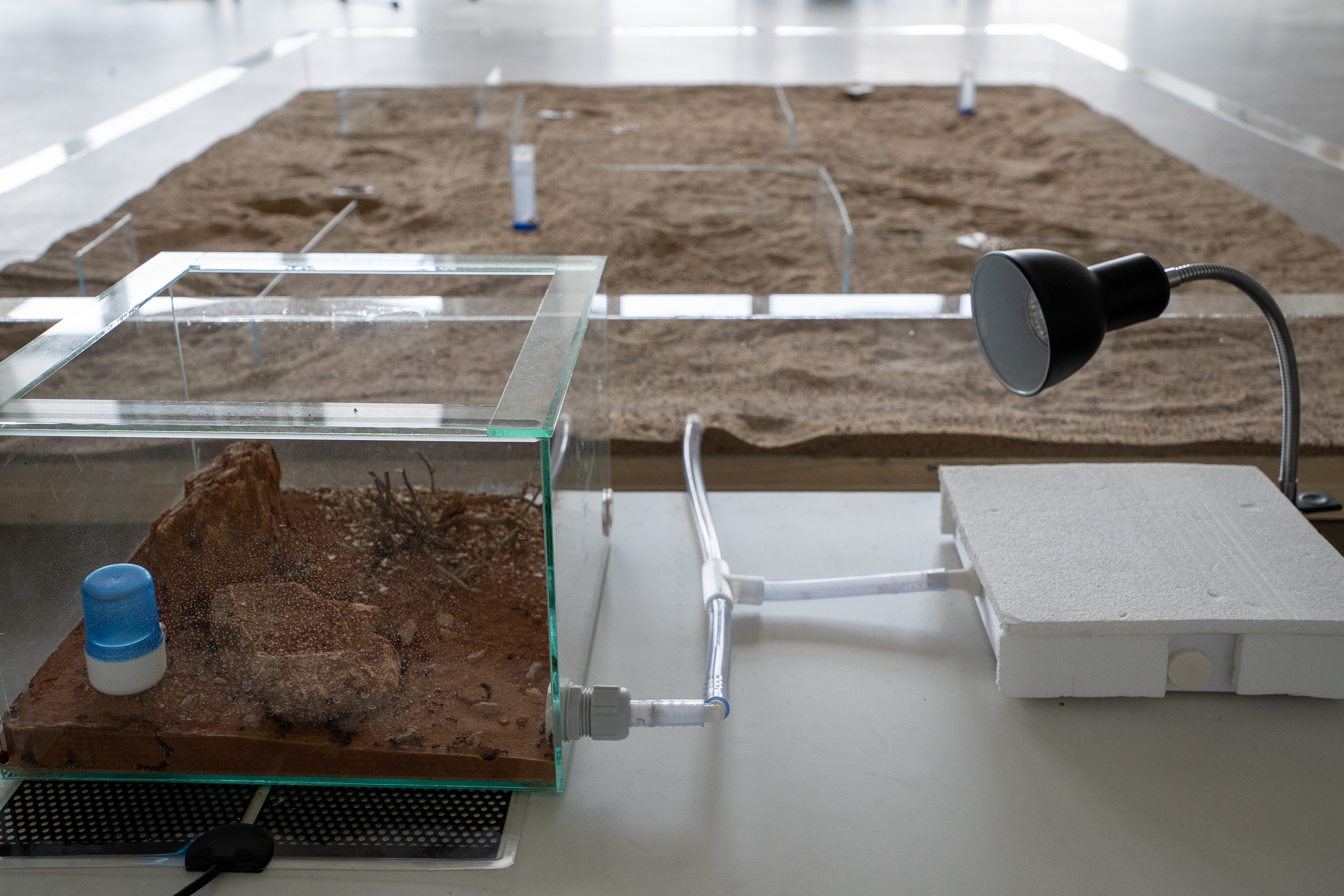
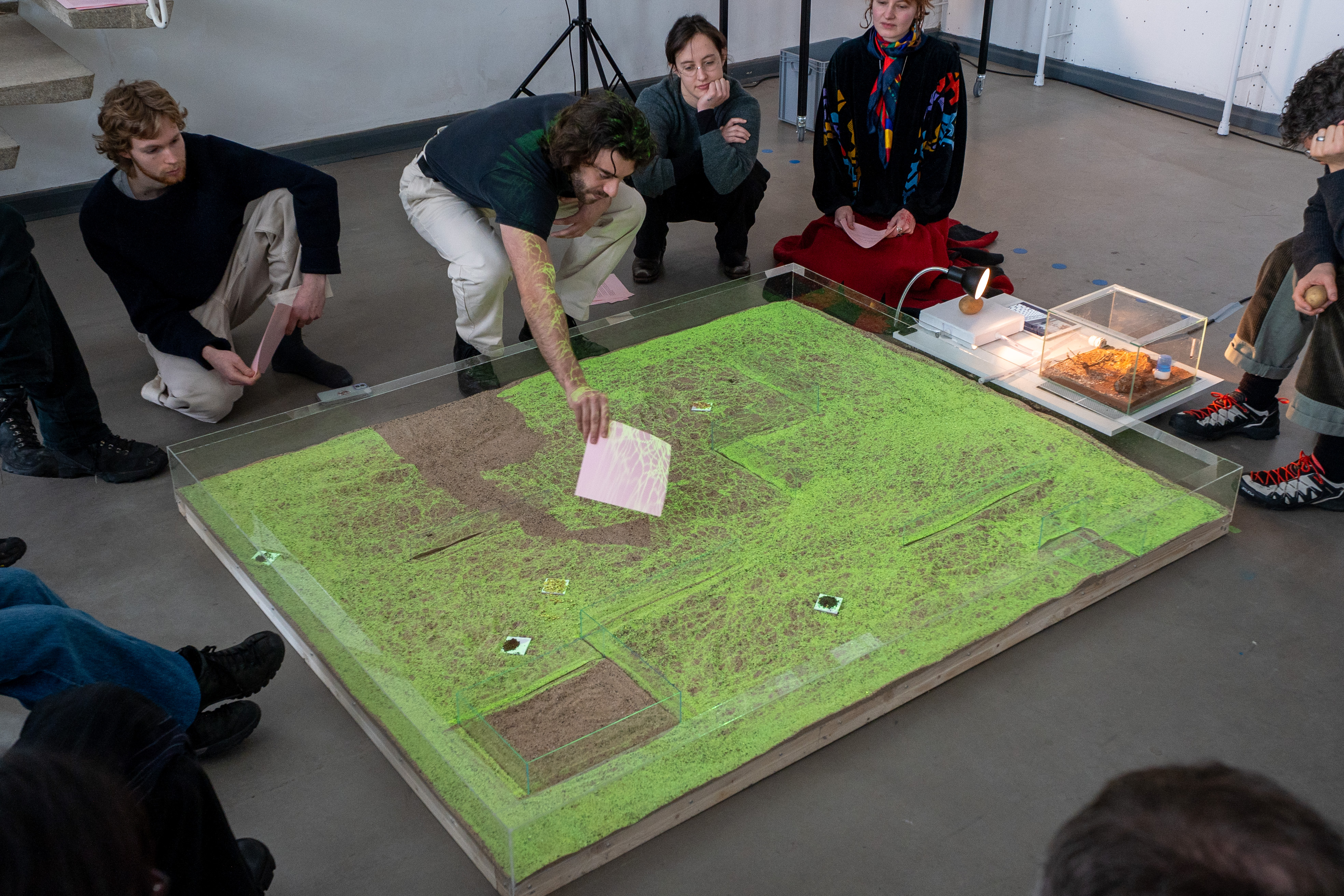
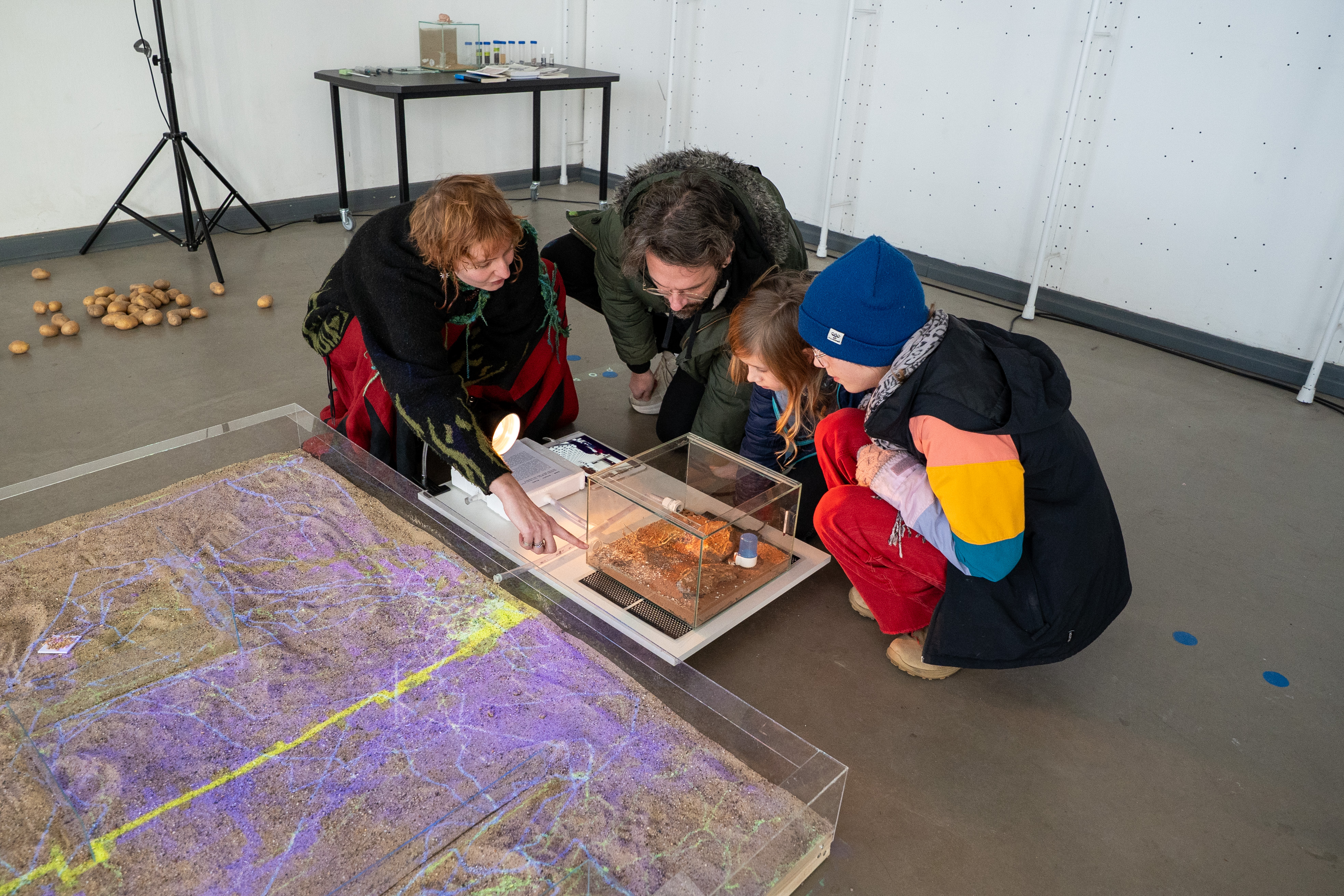
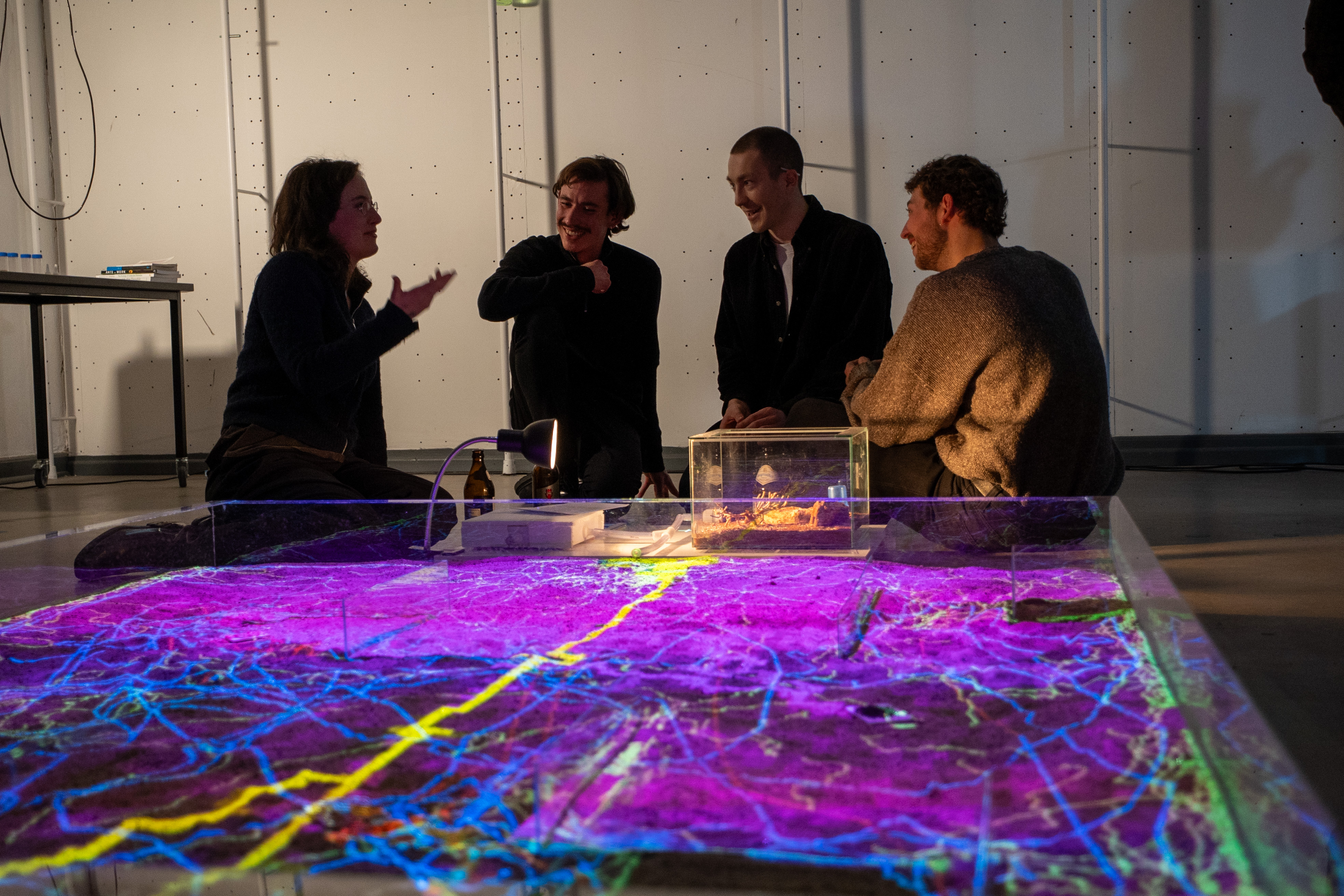
Seed. Potato. Pixel is a research project and installation piece which explores how ants, humans, and algorithms navigate and forage in a shared labyrinth. It uses live computer vision tracking of ants with an overhead camera and projection of their walking paths, simulating ants’ behaviour with the Ant-Colony-Optimisation (ACO) algorithm, and an ethical formicarium design for captive ants, which brings all three types of the agent together in a shared arena. Each layer of the installation enacts a different form of scaled translation, which is projected on top of the labyrinth in order to compare the behaviour of ants (Seed), the embodied human simulation of ant-like experience (Potato), and the human-made extraction of ant behaviour into computational algorithms (Pixel). These three elements are described in more detail below.
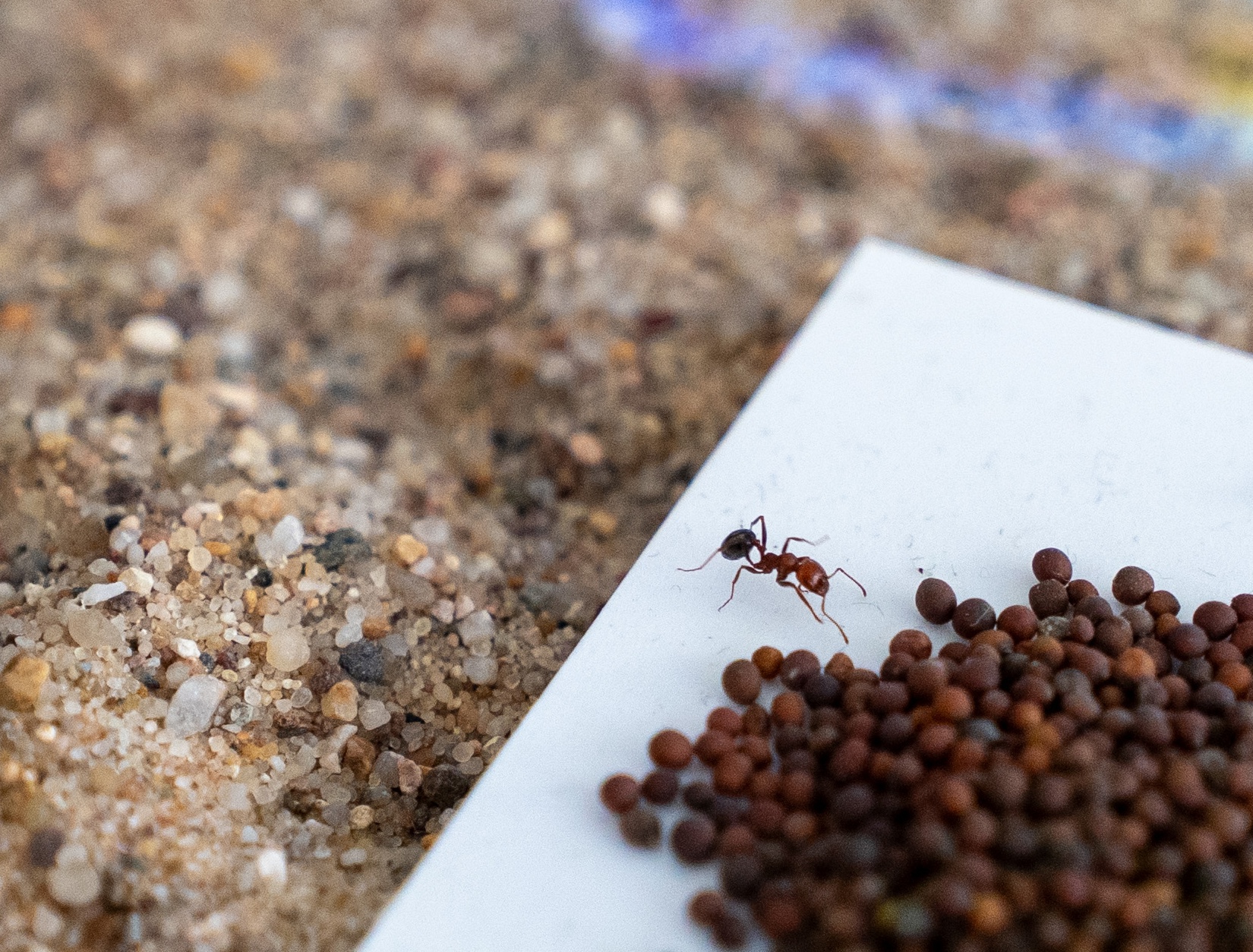
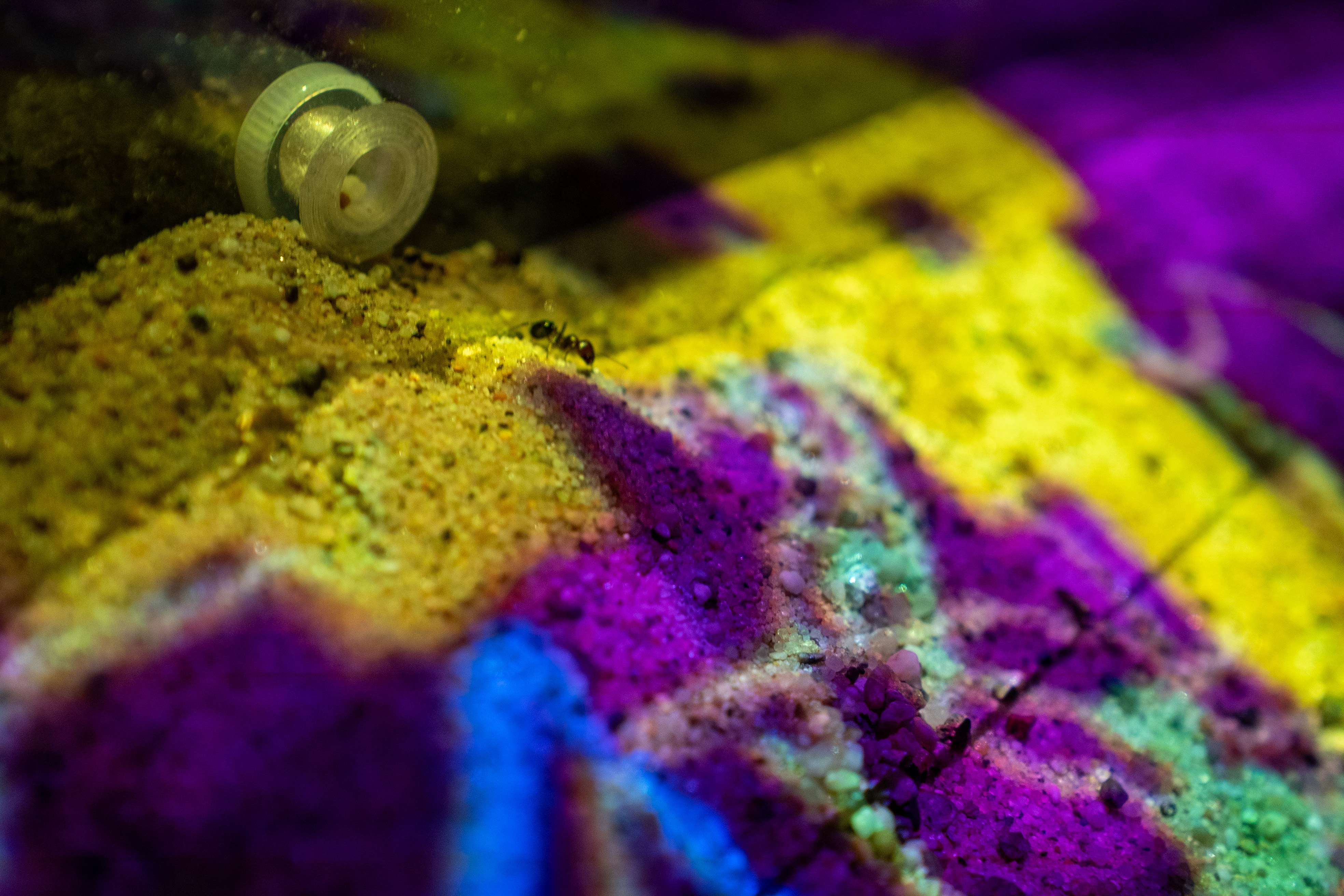
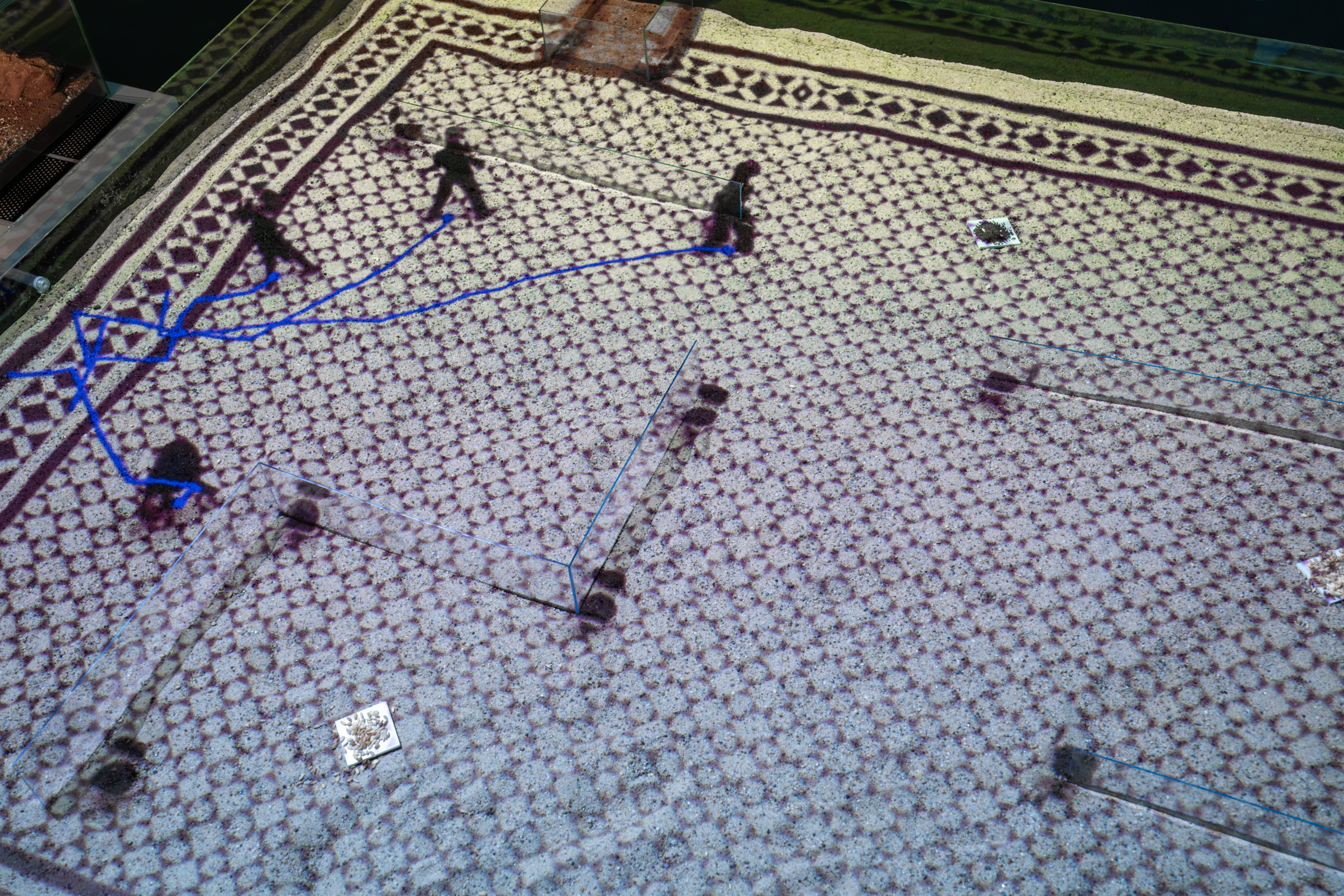
In Seed, we released our second colony of north-african ants (Messor aegyptiacus) into a 2 × 1.6 m sand-filled labyrinth with food sources and obstacles. Using a live computer vision setup, we captured and projected their movements in real-time, revealing surprisingly rich path structures and spatial strategies: The ants followed obstacle edges, built up dense web-like paths, and abandoned seeds when caught in traps. These behaviors invite speculative interpretations about their navigational logic. Intriguingly, the scientific literature holds only minimal findings to suggest that Messor aegyptiacus relies on pheromones like other related ant species do. Our dataset of tracked ant paths over several weeks could provide further evidence for this in myrmecological research.
In Potato, we recreated the sandbox labyrinth at a 10× scale inside the Lichthof of TU Berlin. Four blindfolded participants foraged for potatoes instead of seeds, navigating using only ant-like cues: sound (a nest speaker), touch, and basic physical proximity. Forbidden to speak or use vision, the participants moved slowly and curiously, relying on each other and the sense of touch to build spatial memory. Feedback loops emerged on both emotional and sensorial levels. Participants reported heightened awareness, emergent collectivity, moments of disorientation and shared joy. This simulation highlighted the challenges of cross-species empathy and demonstrated how constraints can unlock new modes of embodied understanding.
In Pixel, we ran an algorithmic experiment using a custom implementation of the Ant Colony Optimization (ACO) algorithm. Here, digital agents foraged in a pixel-based version of the same labyrinth, leaving pheromone trails, encountering obstacles, finding food, and returning to the nest by calculating the shortest path. Unlike the ant or human groups, these agents neither hesitated nor reflected; they looped indefinitely unless their internal parameters allowed escape. The digital agents followed deterministic patterns where ants and humans showed adaptive, socially influenced behaviour.
These three experiments provided a comparative display that captured different foraging strategies and provoked public reflection on how organisms sense, decide, and move through the world. Visitors could witness the breakdown of expected boundaries: humans becoming ant-like, algorithms mimicking biology, and ants confounding digital expectations. The project was successful in its aims to (1) use technology as an interface between species, (2) compare movement patterns across living and non-living agents, and (3) invite a speculative rethinking of what it means to model, simulate, or understand non-humans. Rather than extracting knowledge from ants, we tried to engage in a layered, iterative learning process with them, both aesthetically and experimentally. Although our dataset cannot claim scientific precision, it opens a space for future, ethically grounded interspecies design research.
Additionally, all experiments raised pressing ethical questions about ant-keeping, anthropocentric projections, and our language derived from colonialistic periods (e.g., queen, worker, soldier, etc.). Inspired by Gordon’s (2023) critique of reductionist models, we approached ant behaviour not as something to decode but as a relational system to design with. Our formicarium evolved into a technological hybrid between the lab, sandbox, and speculative interface. In doing so, the project blurred the boundaries between researcher and subject, machine and organism, simulation and observation. For future work, we envision the development of non-confined tracking tools, decentralized sensing systems, and care-based infrastructures that support long-term, ethical collaboration with non-human agents.
Please refer to our 3-minute video to understand how the installation works visually. For a more detailed account of the project and its origins, please refer to our Ants x Interspecies Research Cluster publication (Mac-Nelly et al., 2025).
About the Interspecies Research Cluster and previous experimental approaches
We are four researchers with architecture, fine arts, sound art, and computational linguistics backgrounds. None of us had prior experience with ants. However, we have shared interests in interspecies relations and developing a collaborative, transdisciplinary practice that combines technological prototyping, care work, and critical reflection. The research project began with the speculative idea of building a computer powered by live ants, harnessing methods of using biological lifeforms to compute. While this proved neither efficient nor ethical, the attempt led us to a more profound and surprising inquiry: learning from ants rather than using them, and exploring the entangled dynamics of ants, humans, and machines through design experiments.
Our first experiment, Zoo3, began with the speculative ambition to communicate with our first captive ant colony (Lasius Niger) using the Shannon-Weaver model of encoding and decoding (Shannon, 1948). We built a series of chambers that introduced human-created stimuli: human sweat (smell), vibration/sound, light from electricity and an empty control box. The chambers are based on our understanding of ant sensory perception while inviting human participants to reflect on interspecies sensation through interaction with the installation.
However, as we progressed, the goal shifted: rather than transmitting messages, Zoo3 became a poetic space for mutual exposure. Influenced by Keeling’s (2017) concept of shared arenas of sensation, we moved from symbolic messaging toward open-ended encounters, recognizing that communication across species might be less about information exchange and more about co-sensing, co-presence and ethical attention.
1 / 9
References
Gordon, D. M. (2023). The ecology of collective behavior. Princeton University Press.
Keeling, D. M. (2017). Feral rhetoric: Common sense animals and metaphorical beasts. Rhetoric Society Quarterly, 47(3), 229–237. https://doi.org/10.1080/02773945.2017.1309905
Mac-Nelly, A., Kurth, L.-C., Smith, M. B., & Rosenberg, M. Z. (2025). Ants x Interspecies Research Cluster. https://doi.org/10.13140/RG.2.2.32806.23363
Shannon, C. E. (1948). A mathematical theory of communication. Bell System Technical Journal, 27(3), 379–423. https://doi.org/10.1002/j.1538-7305.1948.tb01338.x
Relationships
- Exhibited at Ars Electronica Festival 2025
- Related to Artificial ants and ethical entanglements